Looking for design inspiration? Browse our curated collections!
11 Years Ago
I want to start this tread as to way to help other to learn the name of some uncommon flowers. Often in my travel, I came across plants or trees I haven’t seen before. Maybe with this we all can learn something. Do feel free to add your knowledge with us!
My first one is the city flower of Hong Kong” Bauhinia or also called “Chinese orchid tree”
This plant is thought to be an accidental hybrid between B. purpurea and B. variegata. It was discovered on the seashore of Hong Kong Island in Pok Fu Lam, near the ruins of a house in 1880 by Sir Henry Blake, a British Governor of Hong Kong from 1898 to 1903 and an enthusiastic botanist.
The genus name Bauhinia was given after the 16th century Herbalists Jan and Caspar Bauhin. After the handing back of Hong Kong to China, a special award was created to replace the British Imperial honors. The award is called the Grand Bauhinia Medal, or GBM for short.
The flower of Bauhinia was adopted by the Urban Council as the floral emblem of Hong Kong in 1965 and since 1997 has been part of the flag of Hong Kong and has become the floral emblem for the Hong Kong Special Administrative Region of the People's Republic of China, and appears on its coins.
Reply Order
11 Years Ago
Xueling, Maybe Alfred can narrow it down, but I think it might be something in the grevillea family.
11 Years Ago
Xueling,
I haven't seen this one before, there are many flowers out west and we don't have here. looks like the Monarda and it does looks like from the succulents. How big is the plant?
11 Years Ago
Thank you, Alfred! The one I posted above is about a shrub size, about 4 feet tall.
I have another unknown tree, please help:
11 Years Ago
Very unusual blooms Xueling but I haven't seen this one before. Does it produce fruites? maybe someone else can name this one?
11 Years Ago
Thank you, Alfred! Maybe it doesn't have fruits, but I really have no idea! I have a lot plant photos I don't know the names. I hope someone will help!!
11 Years Ago
Xueling, I also with flickr ( www.flickr.com ) and belong to a group called " what plant is this?". if you post your photo to that group many can help you with the name.
11 Years Ago
I saw this flower at the Golden Gate Park in San Francisco. It looks a lot like a poppy. It is called “gum rockrose/ Cistus ladanifer. It is a native of the western Mediterranean region. It is indigenous to Spain, Portugal and north-west Africa.
11 Years Ago
I think Xueling's first flower is a pixie bush
http://www.oznativeplants.com/plantdetail/Pixie-Bush/Eremophila/oldfieldii/ssp-oldfieldii.html
And the second one looks like very early lilac blossoms that haven't opened yet.
11 Years Ago
Hi Deborah,
Thank you so much for your link and your response! They may belong to the same family.
The 2nd one was a very tall tree, I think it was much bigger than the lilac.
11 Years Ago
Yes, you are right, but the leaves looked very different. Very green and thicker, heart shaped, and the stems were red color and very strong . The flowers were blooming and looked like little berries, they were not buds. Just liked the way they were, some of them fell off the tree, didn't have any strong scent. The tree looked somewhat like a birch tree.
11 Years Ago
@Saigon: That is Hymenocallis liriosme/Spider Lily.
http://www.onlineplantguide.com/PlantDetails.aspx?Plant_id=1166
11 Years Ago
Thank you Rebecca...now I know what's my new poetry or prose will be themed on this subjective piece of art.
-Saigon
11 Years Ago
Xueling, what you describe could still be a lilac tree. Some have heart-shaped leaves, birch-like bark, red stems, and little to no scent. However, what you describe could also be a redbud tree. Google "redbud tree" and see if the images look anything like what you saw.
11 Years Ago
I don't think it is a red bud or lilac, those looks like seeding to me. the flower of the red bud tree come out before the leaves. here is my photo of it.
11 Years Ago
Hi Deborah, Thanks for your great help! Maybe it was a different type of lilac, but not the red bud tree. Thank you:-)!
11 Years Ago
Sorry Deborah, they are not Blue Lupin. This is more tropical plant with big leaves, which looked like the Calla lily's leaves
11 Years Ago
Thank you so much Alfred!! Amazing eye you have! I think you are right:-)! I've found the link after I searched "Bromeliad", http://www.flickriver.com/photos/jungle_mama/5209488020/
11 Years Ago
Thank you so much Alfred!! Amazing eye you have! I think you are right:-)! I've found the link after I searched "Bromeliad", http://www.flickriver.com/photos/jungle_mama/5209488020/
11 Years Ago
Xueling, could it be a type of Sea Grape - ceccoloba uvifera? It certainly looks as though it would produce lots of fruit - or nuts!
Great thread, Alfred - I love to learn about plant identification - I know more about UK flora. You are so knowledgeable - and I certainly have a lot to learn - lol!
11 Years Ago
Thank you Barbara! I really have no idea if it would produce nuts or seeds then. The plant looked smaller than an average size Calla Lily.
11 Years Ago
Thanks Barbara! I don’t know much about the UK flowers do share with us some more unusual ones we might not had know.
Last year, when I was in San Francisco I captive by this beautiful flowering tree and they were everywhere and the blooms was a lot like the wisteria I used to seeing. It is called “fountain bush” (fabaceae psoralea pinnata).
11 Years Ago
Xueling - sorry it was the tree image I was referring to when I suggested Sea Grape!
Alfred, I'll certainly try to find some. However, to be honest, I imagine most of what we have here is common in much of North America - either accidental imports or not. Perhaps I need to look at some wild flowers to post. Love the Fountain Bush!
11 Years Ago
Thank you Barbara! Mine looks like a Sea Grape: http://www.flickr.com/photos/23251068@N02/5429662244/! So cool, never heard of it:-)!! Thanks a lot!!
11 Years Ago
Hi Barbara,
Do you know this one, the Jade Vine? I love the turquoise flower. I think it is the only flower in that color I know of.
Strongylodon macrobotrys, commonly known as jade vine, emerald vine or turquoise jade vine.
11 Years Ago
I'm not familiar with the Jade Vine - lovely. It is reminiscent of laburnum - the alien version lol! If I post any pictures they are more likely to be less exotic!
I'll see what I can find and come back to your thread tomorrow.
11 Years Ago
Well, at the risk of striking out for the umpteenth time on your flowers, Xueling, that looks a lot like a spiderwort.
11 Years Ago
Hi Deborah, thank you! But I don't think so, I just did a search, the leaves shape and colors are totally different. The leaves of this plant has burgundy and blueish green color pattern on it. But thank you. You do know so many plants for sure:-)!
11 Years Ago
Wow, Alfred, you are right and you are amazing to know all the names. Thank you so much! This is the link I've found: http://www.healthyhouseplants.com/Plant_Encyclopedia/Wandering_Jew.php
11 Years Ago
What an unique plant, I never saw it before! Thanks for sharing it here, Alfred! So interesting! Are you a botanist?
11 Years Ago
Thans Xueling!,I am not a botanist I just interest in learning the names of the flowers I don't know. I go to my local green house and would ask the gardeners questions.
11 Years Ago
You are so good at it, Alfred! And maybe you can create an illustrated dictionary for the people like me interested in plants, but don't know the names:-)!
11 Years Ago
Xueling, I started a set in my gallery called " unforgettable flowers" I will post photos of some unusual flowers. Here is my lastest.
I saw these delicate white flowers at a fast food restaurant’s parking lot. There was a whole carpet of them. These tiny white flowers look a lot like baby’s breath but slightly bigger and about 6” tall. . It is called “snow in the summer”. . It gets their common name from their blooming habit. They bloom profusely in the early summer, and the flowers are a pristine white with little notches cut into them. Cerastium tomentosum is as admired for its delicate, wooly, silver leaves as for its flowers.
11 Years Ago
What a beautiful name and your capture is gorgeous! I love it, and I can imagine the snowy feeling in a hot summer day...
Yes, I took so many unknown plants, I haven't had a chance to look at them. I will slowly post them, since I know you are one of the most knowledgable artists for plants here:-)! So nice to know you, Alfred:-)!!
11 Years Ago
Here is my first contribution.
Ivy Leaved Toadflax - Cymbalaria muralis
This tiny perennial grows on the walls of my garden and is one of my favourite wildflowers. The flowers measure about 5mm across. As the seeds develop the seed head starts to grow toward the shade and so is able to deposit the seed in cracks. It is edible but I have never tried it - I don't think it grows naturally outside Europe.
Great thread, Alfred!
11 Years Ago
The following text is just for additional reference and possible help...
Just to let folks here know, I've noticed that there are groups on Flickr, that will try and help you identify plants, insects, and animals. Many of the members may be experts working in a scientific field related to the subject. Here is one group I belong to called "What plant is that?"... http://www.flickr.com/groups/whatplantisthat/
About What plant is that?
So some kinda botanical wonder caught your eye, and you snapped a photo of it -- but what kind of plant is it?
Submit your photos of unidentified plants, and let's see if anyone else can put a name to it. Alternatively, if you wanna show what you know check out the plants which haven't been identified yet.
Guidelines
Please read and follow these guidelines.
Please post photos to the group pool! Please do not start a new thread in discussion.
Tag it up!
When you add your plant, tag it with unidentifiedplant.
If your plant is successfully identified, delete the "unidentifiedplant" tag.
The tagging should make it easy to find plants which are yet to be identified and prevent them from getting lost in the archives of the group.
Respond to potential identifications
When someone leaves a suggested ID, let them know you've read it by responding. If you don't agree, say so and say why! The best way to get a plant identified is to get into a discussion over it.
Posting Restrictions
Each group member is limited to 6 images per day. If you have more than 6plants to be identified, post the first 6 and then the next 6 the next day and so on. This is so that members only posting one or two images are not lost in the wilderness!
Please keep it to one or two clear shots of each plant: macros are beautiful but are harder to identify, and multiple shots of the same plant won't necessarily make the identification easier.
Thanks for playing!
11 Years Ago
Voodoo Lily (Amorphallus Konjac) is native to the Eatern Asia and with its scent of death and decay. I saw this plant in bloom last year in my local green house and the flower was almost four foot tall. it is one of the rare flowers I seen or smell.
11 Years Ago
Thanks Brian! I belong to that group and learn a lot form it. they have some real experts at that group.
11 Years Ago
Xueling, you flatter me! (Brain) ;)
The best way to find out Xueling, is to click on the link embedded in my post above (repeated below) and see how far you get. You probably will need to join the Flickr group to interact but in any case it's entirely free. You can even put up to 200 images on Flickr for free. If you want to keep more than that, you will need to pay around $24 per year. If you put more than 200 images on Flickr without a paying membership, they just move your oldest image into storage. It's still in the archive and if you deleted an image your old would be restored automatically.
http://www.flickr.com/groups/whatplantisthat/
11 Years Ago
This is a shot of a White Tree Peony I came across here in Vancouver. A little different than the Peonies I'm used to seeing.
11 Years Ago
. . here is a lovely unusual flowering succulent . . Pedilanthus bracteatus (Slipper plant) grows to around 6 feet tall (up to 9 feet in habitat), this upright succulent branches from the base and has narrow cylindrical green stems with ovate leaves, with a thick prominent mid-vein on the lower surface, that are just near the branch tips . . it is very unusual and quite beautiful . . The name Pedilanthus comes from the Greek words 'pedil' meaning shoe and 'anthos' meaning 'flower" . . In the warmth of late spring and summer appear the curiously shaped red cyathia (flower structures containing separate male and female parts) are enclosed in rounded reddish pink bracts near the branch tips. Pollination in the genus Pedilanthus is commonly effected by hummingbirds . . We don't have Hummingbirds here on Maui and so I wonder how they are pollinated .
Pedilanthus bracteatus
11 Years Ago
Kevin,
The Chinese tree peony has an important meaning in Chinese culture,it repesents “wealth and good fortune”. Often, I would see them planted by the houses in Chinatown.Having a Chinese tree peony by ones’ house are mean to welcome wealth and good luck into ones’ home. I meet an old chinese couple they have a 50 years old Chinese tree peony and very year producs over 50 blooms. They told me it was one of the first plant they planted when they first brough their house.
I panted one in our garden about 15 years ago and this spring it has over 100 blooms.
11 Years Ago
Wow, so beautiful! I hadn't seen such a gorgeous blooming for years! Thanks for sharing it Alfred!! You did an excellent job for taking care of it and capturing it:-)!
Thank you, Brian for the info!
11 Years Ago
I think it is a bromeliad as well.
Xueling, if you dead-head the tree peony after it finished blooming it will help to produce more blooms the next year.
11 Years Ago
SAIGON DeCastro, I've seen your spider lily growing in the wild in Fausse Point State Park, near New Iberia, LA. I don't know if an Arcadian/Cajun flavor in your poetry would be botanically appropriate, much less poetically appropriate, but I love the sound/melody/rhythm of the Cajun accents. I lived in Beaumont, Texas, sort of the western limit of Cajun country, for about 5 years.
My unusual flower submission: Greater Fringed Blue Gentian (with inchworm)
11 Years Ago
Thank you Barbara!
Thank you Alfred!!
I searched, looks like it! I love this thread, I can learn so much!!
@ Gregory, I never saw this plant before. Beautiful and I love the feather feeling! Thanks for sharing it!
11 Years Ago
I've seen so many of wild indigo along the coast of California, there are pink, blue, yellow, white colors. They make my allergies worse:-(..., but I love your shot.. Thanks for sharing it!
11 Years Ago
. . good morning Xueling . . . it is a challenge to know exactly what variety it is for your image is like digital art and the colours are enhanced . . yet the form and structure reveal the plant in your image may be a small young Agave .
. perhaps
Agave lophantha ‘Quadricolor’
or
Agave americana "marginata"
or
Agave lophantha variegata
Kingdom: Plantae
clade: Angiosperms
clade: Monocots
Order: Asparagales
Family: Asparagaceae
Subfamily: Agavoideae
Genus: Agave
Species: xxx (unknown)
. I would need to see the original unprocessed image to be sure but it appears to be an Agave . . We have them here on Maui and when they are growing in a naturalized state they become quite huge with a width of about ten feet or more and produce a flower spike - a central stalk or "pole" that can be over thirty feet high . inflorescence of the agave are very beautiful . . . the thorny edges of the "leaves" are very razor sharp . . I have a keiki growing in a stone pot . I call it a sharp and keep it segregated in the garden from my tropical flowers I must take care not to walk too close or it will slice my skin and it really hurts or to brush it with my dress for it will rip it to shreds . nature's defense works perfectly . . . . I have kept it in the stone pot to contain it's small size . . about 1 foot . . if I were to place it into the ground it would require an enormous foot print . .
http://en.wikipedia.org/wiki/List_of_Agave_species
Here is a photograph of the inflorescence of Agave sisalana Perrine Sisal Hemp photographed in Kanaio on Maui
Plant Kingdom Plantae Plants
Subkingdom Tracheobionta Vascular plants
Superdivision Spermatophyta Seed plants
Division Magnoliophyta Flowering plants
Class Liliopsida Monocotyledons
Subclass Liliidae
Order Liliales
Family Agavaceae Century-plant family
Genus Agave L. agave
Species Agave sisalana Perrine sisal hemp
Wherever you see Sisal on the island you will know someone has lived in that area at one time. These beauties are growing mauka at upper elevations near Kanaio and Ulupalakua. The deep blue background is the beautiful morning sky and pacific ocean far down below . . The strong thin fibers of the spiny leaves are harvested for plaiting and weaving mats and other useful articles and crafts. This plant is considered an invasive noxious species in the Hawaiian islands.
You may read more about it here
http://plants.usda.gov/java/profile?symbol=AGSI2
http://plants.usda.gov/java/noxious?rptType=State&statefips=15
Aloha
Sharon Mau
11 Years Ago
Xueling, I don't know wild blue indigo comes in other color than blue perhaps you thinking of Lupinus? Lupinus does come in yellow, pink, white, mave and purple.
11 Years Ago
Hi Alfred, I believe you are right! I saw colorful similar flowers like your photo's, I don't know what kind plant is again:-(.
11 Years Ago
marking this for the future since I have a ton of flowers I haven't a clue what they are. :-)
11 Years Ago
Sharon, here is my close up of the Agave in blooms. I don't think Zueling's is an Agave.
11 Years Ago
Thank you all, I've learn a lot here. And I am updating my images for correcting some names. Some links can be broken now.
11 Years Ago
Golden dewdrop (Duranta erecta) is a species of flowering shrub in the verbena family Verbenaceae, native from Mexico to South America and the Caribbean. It is widely cultivated as an ornamental plant in tropical and subtropical gardens throughout the world, and has become naturalized in many places. It is considered an invasive species in Australia, China, South Africa and on several Pacific Islands. Common names include Golden Dewdrop, Pigeon Berry, and Skyflower.
11 Years Ago
Anemone blandas blue star flower early in the season providing long-lasting colour and their delicate, simple flowers with their numerous yellow stamens are very endearing. Anemone blandas naturalize well so be sure to plant them under trees and shrubs or amongst perennials for early season colour.
11 Years Ago
I was at a short trip last week and came across this flowering tree near the hotel. It has tiny yellow flowers. At night the flowers had a sweet scent. I had not seen this one before and later I posted on the flickr group "What plant is that" and I was told it was a Elaeagnus umbellata, also referred to as Japanese silverberry,umbellate oleaster, autumn-olive, autumn elaeagnus,or spreading oleaster,is a species of Elaeagnus native to eastern Asia from the Himalayas east to Japan. Because airborne nitrogen can be fixed in its roots, it has the capability to grow in infertile habitats.
11 Years Ago
Thank you for sharing your flower captures, Alfred!
I have another one need your help for the name. Thank you so much!!
11 Years Ago
Thanks, Alfred! It is perennial, and it has long, narrow leaves, very tough plant, blooming in early spring in California. The flowers are much smaller than perennial pea's.
11 Years Ago
This unusual hibiscus comes fromEast Africa and is also known as the Coral Hibiscus, Japanese lantern hibiscus. The slender stems grow tall and upright quite rapidly and will reach around 2 meters and then arch over to form what could be best described as a pendulous canopy.
11 Years Ago
Thank you Sharon and Alfred!! I checked both Wild Sweet Pea, Purple Peavine or Wild Sweet Pea, Lathyrus eucosmus, no of them showed the same vine I saw. It was very tall, climbed on top of the 2nd floor building.
@Alfred, Your hibiscus capture is amazing! I don't think I saw this kind before, gorgeous:-)! Thanks for sharing:-)!
11 Years Ago
This one's name is echinopsis eyriesii, gymnocalycium mihanovichii, echinopsis, gymnocalycium. Lol, I don't know how to pronounce them, but I captured them from our neighbor's front garden. It only blooms in the evening (one night only) once a year.
11 Years Ago
Xueling
Thank you for sharing this. Yes, that's how you spell it. "Echinopsis Eyriesii" the common name is Easter cactus. I have one in my studio and produces white flowers..
11 Years Ago
@ Alfred I have the same tree in my front yard that blooms the same before the leaves come out, always thought it was a redbud
11 Years Ago
Bill, you are right it is a day lily. there are quite a few trees which bloom first before the leaves come out. such as Magnolia.
11 Years Ago
Water hyacinth is native to South America but has naturalized much of the Southern U.S.
11 Years Ago
Solandra maxima, also known as Cup of Gold Vine, Golden Chalice Vine, or Hawaiian Lily, is a vigorous vine which is endemic to Mexico and Central America. It has very large yellow flowers and glossy leaves.
11 Years Ago
I noticed many had mis-labled/tag Mums as Dahlias or Dahlias as Mums.
Dahlias and Chrysanthemums (Mum) have similar flowers at first glance. They both have multiple forms, from single, flat-pedaled flowers with a visible eye to pompon and anemone forms. Dahlias, however, bloom in midsummer right into late fall and the color range from soft pastel to eye-catching color except true blue. The blooms range from 1/2 inch wide to over 12 inches. In contrast, Chrysanthemums bloom when summer days shorten, from early to late fall. Their flowers are also smaller, staying 2 to 6 inches wide, and have a slightly narrower range of color, from reds to warm purples, yellows and even bronze.
Here are some examples:
11 Years Ago
A bedding plant flower. Not sure if its in the spider group? Anyone know the real name?
11 Years Ago
This thread is just what i need - ok to put up some flowers i have soon? yet to upload them tho...
11 Years Ago
Warren,
Sorry - I don't recognise that one - perhaps if you say some more about it, size etc. Beautiful image though.
Alfred is so knowledgeable I hope he knows.
11 Years Ago
The bush is almost like a sea grass bush with many stems and the flowers are not clumped in one area.
The flower is 3/4" wide. I have taken some pink spider flowers in this area...but these are white?
11 Years Ago
Hi Warren... I think that's a gaura plant... also known as 'whirling butterflies'. They are so graceful... :)
11 Years Ago
I think you nailed it:
http://en.wikipedia.org/wiki/Gaura
Thanks!
11 Years Ago
Asclepias tuberosa (butterfly weed) is a species of milkweed native to eastern North America. It is a perennial plant growing to 0.3–1 metre (10 in–3 ft 3 in) tall, with clustered orange or yellow flowers from early summer to early fall.
11 Years Ago
Xueling, it is hard to tell from this photo. it this from a tree? do you have other photo showing more detail of the flowers. how big are the blossom?
11 Years Ago
Thank you, Alfred! I don't have another photo! But it was a tall bush (6 to 8 inches), each branch was cascading. Each flower was tiny, looked like a lantern shape.
11 Years Ago
Hi Barbara, Thank you! I checked, the leaves looked different. The flowers were not open up when blooming (in my capture).
11 Years Ago
Sorry, Alfred. The tiny flowers looked like lantern shapes only, not opening up. One branch had hundred of the tiny flowers. Do you know what I mean? Thank you!
11 Years Ago
Oh, you mean they are like little bells? Do they have scents? what kind of leaves? you said it was a tall bush 6"-8"? but 6"to 8" is not that tall. do you mean the flower branch was 6"to 8"?
11 Years Ago
Yes, they look like bells. Maybe had scents, but I had allergies, won't smell anything then:-(... The leaves were small, kind of oval shape, but looked dry. The one was in my images was taller than 6 feet. some others were taller than that one I captured.
11 Years Ago
it could be Robina, Califorian lilac or Jacaranda. try google image see if it match your photo.
11 Years Ago
Wow, I am amazed by your plant knowledge, Alfred! How could you remember SO many names!
I've found the match: http://www.wildscaping.com/plants/plantprofiles/Ceanothus_arboreus.htm I didn't see the open part, and sorry about my limited English explanation too. I can't believe it is a native plant here:-)!! Happy:-D!!
BTW, the one I saw as similar like this: http://www.jardinexotiqueroscoff.com/site/uploads/pictures/plante/800x800/rhamnaceae-ceanothus-arboreus-trewithen-blue-1.jpg
11 Years Ago
I'm not much of a plant and flower guy, so I've been trying to figure out the name of this circular flower I snapped at a local botanical garden some time ago.
11 Years Ago
@Alfred, I've forgot to say Thank you very much!! I was too excited to know the name:-)!
11 Years Ago
You are very welcome Xueling!
Lou, that looks like one of the species from the Pelargonium ( Geranium)
11 Years Ago
I love the Catalpa tree, Catalpa is a handsome tall tree with large heart-shaped, sharp pointed leaves. In late spring produces showy white or yellow flowers not unlike the Rhododendren. The long fruits which resemble a slender bean pod.
11 Years Ago
Alfred if anyone could assist in naming this flower, I'd apprecaite it, found growing wild along a canal path in London a few years ago, ive not altered the colors at all but it might be looking slightly bleeched out as it was very bright sun that day if I remember.
11 Years Ago
Jason that's an easy one. it is Centaurea the commom name is (Cornflower, Bachelors button, Bluebottle, Boutonniere flower, Hurtsickle, Cyani flower)
11 Years Ago
Thanks Alfred!! you are an expert I can see, I just really like photographing flowers because of their colours and shapes....
11 Years Ago
You are welcome Jason. I am not an expert, I like to take photos of flowers as well. if I seen one I don't know I would try to find out.mostly from books and sometimes from the net.
11 Years Ago
White Japanese Anemones. Found in Melbourne Botanic Gardens this May. Aw! just noticed the shadow. I like it but as a flower photograph probably should have gotten rid of shadow..:))
11 Years Ago
Alfred, I'm not sure if anyone commented about your red bud picture or not...but it is a red bud. I can tell by the leaves. Sometimes the leaves will start to come out before the flowers have gone away.
Also, I think this is a great thread, but wanted to let you all know that someone started a team just for this purpose. Check it out: http://fineartamerica.com/groups/identify-it.html
11 Years Ago
Leslie, I posted the red bud photo to show Xueling how the red bud looks like. I do know about that group and I joined last week already.
11 Years Ago
Leslie, it is OK, It happens to all of us.
Here is today's flower:
Borage, (Borago officinalis), also known as a starflower, is an annual herb originating in Syria, but naturalized throughout the Mediterranean region, as well as Asia Minor, Europe, North Africa, and South America. This plant was thought to be native of Assyria, but is probably of North African origin, where there are other Borago species. It grows to a height of 60–100 cm.
11 Years Ago
Maria, over here the Japanese Anemone are late-season flower, it usually blooms from Augest to October. here is the pink Japanese Anemone.
11 Years Ago
Alfred, the pink Anemone is beautiful. I did a lot of browsing in my A-Z plant book, which I dusted down and now keep close, to find the specific name of the White Japanese Anemone. There were several with slightly different shapes and sizes and therefore different names. This is a good way of retaining info specific to flowers and I suppose helps people find a particular flower image that they want. I think Gregory suggested for me to organise my work in this way, a while back, just havn't gotten around to it.
I recognised that beautiful carpet of Petunias right away though.
I think the Catalpa flower is what I snapped at the Botanic gardens lately what do you think? It wasn't a tree though!
11 Years Ago
Maria, Thank you for sharing this beautiful photo. I never seen the Catalpa with pink flowers before which got me doing some research on the net. this is what I found:
Farges catalpa is an rare plant that was found by western dendrologists in China in early 20th century. Forma decluxii is a unique plant that deserves attention when in full blooms. Its flowers are formed in up right panicle larger than on Northern catalpa , lilac to pink in color with conspicuous yellow and red blotches in the throat. Blooming time is early July.
How tall is this plant?
11 Years Ago
Gloriosa rothschildiana or Gloriosa Lilies are a climbing member of the Lily family, which are natives of South Africa. (The plant was name after Lord Rothschild, a garden lover and plant collector; in fact many plants were name after him). Some common names include climbing lily, gloriosa lily, flame lily and glory lily. All parts of plant including root stock are poisonous if ingested.
11 Years Ago
Love Gloriosa lily! Looks really intricate. If my pink/purple plant is what you say,I will re name it. I think it must have been about 6ft/1.8m high.
Anyone familiar with this flower? It belongs to a shrub with dark green semi glossy leaves.The flowers are tiny and look like little stars from a distance which flower in tiny clusters of up to about 5. It reminds me a little of the hawthorn flower but i don't think it is. It could be an Australian native.
11 Years Ago
Maria, the young Catalpa tree can produces flowers as well. There is one on my street is about 5' tall and is in blooms with white flower. ther eare many flowers in Australian we don't have over here. you should try the Australian botanical gardens there, many batanical gardens post photos of plants there.
11 Years Ago
The Yellow Loosestrife (Lysimachia punctata) is a tall, handsome perennial, from 2 to 3 or even 4 feet high whose flowers are at their best in July and August.
11 Years Ago
Alstroemeria commonly called the Peruvian Lily or Lily of the Incas, is a South American genus of about 120 species of flowering plants.
11 Years Ago
Wow, I don't think I saw this type of lily before! Beautifully captured, Alfred!
I really have learned something new here. I still have one, the first one I posted. I wish I could find the name soon:-)! Here is the one:
11 Years Ago
Sorry, Alfred. Can you see the flowers came out from a 5-feet tall bush, the green leave looked like kind of pine needles, a lime green color contrasted with bright orange color flowers?
11 Years Ago
Thank you Deborah! I did search "Russelia equisetiformis", they look like a same family, but I haven't found an exactly same plant like the one I took, the branches were hardy, and the "pine needles" were much shorter.
11 Years Ago
Well what do you know..I was locking a door in work which opens out onto a japanese garden where the students eat lunch and what did i see not only one of the shrubs i was trying to name
( the snow white one) but there was 3 of them!! amazing what you pass every day without noticing. There was no label on them but a colleague has one in her garden and is going to find the name for me. I have an idea to name every plant/shrub/tree in my garden. i reckon i will be surprised at the number and variety.
11 Years Ago
I saw this one at my local greenhouses and it took me a while to find out the name: blue cat's whiskers!
11 Years Ago
Barbara Thankyou, tea bush , never even heard of it! This thread is becoming a real gardening thread, a mix of art and gardening :)
barbara, I went to the tea bush page for more info and thought that the image of the flower wasn't exactly like mine but as i scroledl down i saw the exact flower which is the kumquat blossom...have a look. Now, even though i say that I can't recall any fruit being on this shrub but i will watch it and see if any fruit eventuates, maybe it is a variety of that family that does not bear fruit? Don't you just love discovering things?
11 Years Ago
Kumquat blossom? We have a few of them in the local greenhouse next time when it blooms I will check on the flowers. I think in the future we need to list the size, height and where the flowers in question. it will be helpful for our search.
11 Years Ago
My new capture from our neighbor's front garden. I've found the name is " Ferocactus Latispinus".
11 Years Ago
very nice Xueling! the common name for this cactus is Devil's Tongue Barrel .I only seen the ones with yellow flowers.
11 Years Ago
Thank you Alfred! I will add the comment name into my keywords. Have a wonderful day:-)!
11 Years Ago
Maria, I've never seen a kumquat bush in flower.
I also like trying to identify things I'm not so familiar with. I have certainly been enjoying following this thread. I have taken some more photographs of some of the weeds - or should I say wildflowers - growing in my garden which I should post here.
One site which I have found useful to identify plants here in the UK and Ireland is botanicalkeys.co.uk - it is quite straightforward if you have a specimen to hand.
Some wonderful images here!
11 Years Ago
Red Valerian is a common weed. Unfortunately, it is abundant in my garden. While it looks lovely it seems to be doing its best to demolish my garden wall - the huge root forces the stones apart.
11 Years Ago
My work colleague seems to think that although the flowers i showed her look exactly like kumquat blooms they cannot be if there is no kumquats. so, i am still in search of this one. It is deceiving in my image because it looks large but is only tiny.I was practising getting detailed close ups when i fell in love with this small flower which you could so easily miss. it smells a bit like mock orange and the leaves smell not so good.
11 Years Ago
Maria, other citrus have a lovely scent on the leaves so perhaps your friend is right and it isn't kumquat.
Perhaps it is a variety of jasmine. I hope you manage to identify it - your photographs are beautiful!
Edit - I've looked again and don't think it's a jasmine.
11 Years Ago
I was at my local greenhouse this afternoon and found one kumquat tree has flowers on it. here is my kumquat flower.
it looks different from Maria's photo.
11 Years Ago
See! They are so similiar, but the petals are different and the crown shapes of the inside of the flower are different. i have a couple of lemon, orange and grapefruit trees which also have similiar flowers, but this shrub has no fruit! so, today I am going to photograph it as is, instead of enlarging, you may recognise it better.:))
11 Years Ago
This isn't a flower, obviously, but I would love an id. It appears to be some kind of wasp. I found it at high altitude at the tree line in Rocky Mountain National Park near Estes, Colorado, in middle July.
11 Years Ago
Sorry Gregory, I don't know much about bugs but there is a group called " indenify it" you can post it there.
11 Years Ago
http://www.arizonensis.org/sonoran/fieldguide/arthropoda/chlorion_aerarium.html
Gregory - look at this one. The cricket hunter wasp.
11 Years Ago
There are some differences in shape. However, there are hundreds of species of this family of wasp, which is known as a Cuckoo Wasp. I'm sure the cricket wasp is a member of this family. The family has the blue/green iridescence, and lays its eggs in a host, which serves as a food supply for the larvae. Thus the name, since the parasitic behavior of the Cuckoo, which lays its eggs in the nests of other species of birds, to be raised by unwitting parents of other species. Thanks for your help, so I thought I would follow up with what I found out. BugGuide.net is a good resource for insect ID help.
11 Years Ago
I seen this flower everywhere this year, finally find out the name it is a foxglove, smooth penstemon the common name is beard tongue.
11 Years Ago
These two pink ones are called King Protea - I do believe they are South Africa's national flower. They are part of the fynbos family, which is indigenous to here. I've heard that this one area of the world is known as the floral kingdom, and that there are more species packed into a smallish area than any other place in the world. It's in the Western Cape, or Cape Province, South Africa.
And this is called a pincushion, which is also in the fynbos family:
11 Years Ago
Alfred, it just came to me, when I took the shot in Hawaii they called it a "shaving brush".
11 Years Ago
Bob, I look it up on the net and the ones I found it very different from yours.. here is one photo I found.
http://www.flickr.com/photos/32210189@N02/3817626608/
http://en.wikipedia.org/wiki/Haemanthus_albiflos
11 Years Ago
Finally, I've found the name of the plant which I captured long time ago: it is called Erica, from north Africa, here is the link if anyone wants to know more about it: http://en.wikipedia.org/wiki/Erica
11 Years Ago
Xueling, glad you fianlly find out the name of this flower!
here is my flower of the day:
Gomphrena haageana, strawberry fields
11 Years Ago
By the way, in many locations in the US "obedient plant" is considered a noxious invasive plant. Think very carefully before planting this. It can be extremely difficult to get out of your garden once established.
11 Years Ago
Thanks Gregory! I guess the name "Obedient" just a cover up so it can gets into our gardens. LOL
11 Years Ago
Blue Puya, Puya berteroniana, Hardy Bromeliad.
I saw this unique flowers at our nearby Arboretum. I just could not believe how unreal they looked in the plant kingdom. . It was an unforgettable experience to stand next to one of these massive 8 feet tall blue stalks. The flowers color were perhaps a darker huge of unbelievable turquoise-blue. More info about this plant is under my description area of the image.
11 Years Ago
A flower from the Empress (or Princess) tree from China.
Said to be one of the fastest-growing trees. Some have reported tree growth of 18 feet per year, if you an imagine that.
Never saw this flower before I ran across and captured it. Very unique fragrance. Almost candy-like, like some sort of bubble gum. The tree was filled with the flowers. Very beautiful, and would love to have one, but with it growing so fast, would probably be expensive to maintain.
11 Years Ago
Alfred, this is another gorgeous one.
I was wondering if it was Thrift. A lovely splash of colour whatever the flower!
11 Years Ago
Thanks Barbara! it is called " gomphrena fireworks" not sure what the common name. is here is another shot of it.
11 Years Ago
AT LONG LAST! The white flower that I have been trying to name is the Mexican Orange Blossom.
Description:
A medium size shrub with abundant small white flowers
Botanical Name: Choisya ternata
Common Name: Mexican orange blossom
Growth Habits: A small shrub to 1m. This compact evergreen shrub with bunches of sweetly scented white flowers in spring,grows well in moist well drained soil in a sunny to partly shaded position. Great as a hedge or individually planted. Prune lightly to maintain compact growth.
Watering Needs: Drought tolerant species once established. Tip prune after flowering to maintain shape and size.
Pot Size: 20cm & 30cm pot size
11 Years Ago
Well done, Maria!
Here is one I think everyone will know - I love blackberries but the thorns on Bramble don't like me!
11 Years Ago
Love this flower Barbara. reminds me of blackberry picking as a child, and yes getting scratched to bits! :)
11 Years Ago
Medinilla is a genus of about 150 species of flowering plants in the family Melastomataceae, native to tropical regions of the Old World from Africa (two species) east through Madagascar (about 70 species) and southern Asia to the western Pacific Ocean islands. The genus was named after J. de Medinilla, governor of the Mariana Islands in 1820.
They are evergreen shrubs or lianas. The leaves are opposite or whorled, or alternate in some species. The flowers are white or pink, produced in large panicles.
11 Years Ago
Hi Kathy,
go to your image and on the bottom right click on image link then you can copy and paste on here.
11 Years Ago
for some reason Alfred it will not allow me to copy the link. It turns blue, but won't copy. I can copy other things so the problem is not my mouse
11 Years Ago

I'd like to share this to everyone, an orchid species found in my home island in the tropics.
Grammatophyllum is a small genus of large plants, in fact the largest in the orchid world, G. speciosum (Tiger orchid), is of tree-like proportion - its stem is 3 metres and the flower spike is another 2 metres. This is the flower of the rather rare G. martae, the black orchid recorded from Negros Island in The Philippines.
11 Years Ago
I am going to try this again. Here goes with a venus looking glass Alabama USA wildflower
11 Years Ago
Thanks Al. There is a Yucca baccata that looks close.
http://en.wikipedia.org/wiki/Yucca_baccata
11 Years Ago
I noticed many had titled their images water lily as lotus. In fact, lotus and water lily are different plants. Water lilies have lily pads that float on the surface; lotuses have leaves that are held above the water, and blooms that are much larger than water lilies, and often in pink, white.. Both have beautiful flowers. People often confuse the water lily a "lotus
Lotus is an aquatic plant native to southern Asia and Australia, having large leaves, fragrant, pinkish flowers, a broad, rounded, perforated seedpod, and fleshy rhizomes.
The edible seed and roots are edible and the leaf often uses in Chinese cooking.
11 Years Ago
Alfred this beautiful white Lotus is actually native to the southeastern United States as well. I took this image in Morgan County along the Tennessee River in Alabama.
I found a site that has this to say:
American Lotus
Similar in appearance to its Asian cousin, the American lotus produces pale yellow flowers that float along the surface of ponds, lakes and streams in water as deep as 6 feet. These flowers can have over a dozen circular petals. The American lotus is native to the Southeast as well as other areas of the eastern United States and Canada. The plant's large seed pods are often sold as crafts and ornamental objects. The American lotus spreads rapidly by planting its rhizomes along the substrate.
http://www.ehow.com/list_7406543_aquatic-plants-southeastern-united-states.html
Read more: Aquatic & Wetland Plants of the Southeastern United States | eHow.com http://www.ehow.com/list_7406543_aquatic-plants-southeastern-united-states.html#ixzz20W4onCP7
11 Years Ago
This is an oxeye daisy wildflower. Even though they are introduced in the United states they are everywhere and quite lovely. There are virtually fields of them. This shot was taken in Limestone County Alabama.
11 Years Ago
Thanks Kathy! it must be a beautiful slight with a field of white daisy. I looked it up on the net and it mentions it can be used as food:
"The un-opened flower buds can be marinated and used in a similar way to capers. I wonder if any has tried it?
11 Years Ago
Kathy, in Chinatown here some sniors would grow tiny yellow daisy and they would dried and use as tea.
11 Years Ago
Ligularia, Leopard Plant, is a genus of "Old World" perennial plants or herbs resembling groundsel of the family Asteraceae. Ligularias are rather tall perennial herbaceous plants occurring mostly in damp places in Europe, Asia and Africa.
11 Years Ago
Wow, interesting plant and gorgeous capture! I don't think I saw this one before! Thanks for sharing it, Alfred!
11 Years Ago
Impatiens glandulifera also called “poor man's orchid” is a large annual plant native to the Himalayas. Via human introduction it is now extant across much of the Northern Hemisphere.
11 Years Ago
Yesterday, we have the poor man's orchid and today we have the nun's orchid:
These plants owe their unusual name to the shape of the long-lasting, fragrant flowers. They call to mind a nun’s head bowed in prayer.
11 Years Ago
This succulent's name as: Echeveria, in the Crassulaceae family, commonly known as 'Hen and chicks'
11 Years Ago
beautiful shot Xueling.
The "hen" is the main plant, and the "chicks" are the offspring, which start as tiny buds on the main plant and soon sprout their own roots, taking up residence near to the mother plant. they are rather hardy even with the cold winter in Toronto they comes back every year.
11 Years Ago
Thank you for your explanation, now I can well understand and see the reason:)! I can not believe they have such strong life, can live in Toronto, amazing!
11 Years Ago
Dendrobium is a huge genus of orchids.it contains about 1,200 species. The genus occurs in diverse habitats throughout much of south, east and southeast Asia,
This one is from my garden, I keep it indoor during the winter and as soon as the weather is warm enough I would take it out in the garden and hang it on our pear tree. Last winter was rather mild so I took it out even earlier,I was rewarded with 25 blooms this month.
11 Years Ago
Hi all...
we need some help....perhaps someone will put some light as to what is the name of the white flowers in the image below please???
The orange flower is Calendula Officinalis....we know that...but the white tiny flowers we are not sure of...I think it could possibly be Gypsophyla...as there are over 120 species...
Maybe you can put some light on this???
Thank you so much for helping us
Richard and Jolanta
11 Years Ago
Richard and Jolanta, it is coriander flower, I have some in my garden.
http://www.flickr.com/photos/alfredng/7331923806/
11 Years Ago
Thank you so much for sharing your beautiful orchid blooming, Alfred! I can't believe that it has got so many flowers in such a cold climate, you must have a Very Green Thumb, besides your talent in painting:)!
11 Years Ago
Xueling, summer in Toronto can be very hot as well. I do have a number of orchid plants in my studio, they usually bloom in the winter.
11 Years Ago
Hi Alfred....
How wonderful! Such a quick reply!! Richard is going to be very happy now that we know what the flower is called....
It looks so pretty that I would like to grow it in my garden too...
thank you so much for your help...
Jolanta and Richard
Inspired Nature Photography Fine Art Photography
11 Years Ago
Can anyone assist with this.
I took this image in Ontario Canada near Hamilton Ontario.
It was during a Garden Tour. ... I missed the name.
http://shelley-myke.artistwebsites.com/featured/exotic-flower-with-rain-drops-shelley-myke.html
Thanks
11 Years Ago
Shelley, beautiful macro shot of the Tradescantia, the common name is Spiderwort.
Alfred
11 Years Ago
Anyone knows the name of this flower? I called it rose just because it sounded good and because it looks like a rose for me.
11 Years Ago
I can't make out the flower from your photo, do you have another shot focus on the flower?
11 Years Ago
Alfred, I dont have a closer picture, but thank you for your guess (thank you too Jolanta)! I think you are right
11 Years Ago
Jolanta, Richard, in case you don't know, Coriander also known as cilantro, Chinese parsleyis uses in many Asian dishes.if you don't want them take over your garden you shouldn't let the flowers turns into seeds.
11 Years Ago
Thank you Alfred...yes...I was always wondering what Cilantro was when I am at the Chinese market...so now I know! And yes to your suggestion re: deadheading flowers...I do that especially with my Daturas...so they keep blooming and have abundance of new flowers....
thank you so much once again...
regards
Jolanta
p.s. what a wonderful source of information in this thread Alfred...keep it going!
11 Years Ago
You are welcome Jolanta!
Datura, (angel trumpet or moon flower) are very toxic. I read an article in the paper a few years back, teenagers trying to get high would intentionally ingesting datura and became seriously ill from it.
11 Years Ago
Thank you Alfred...yes...I know of the toxic properties of Daturas...and some people would just do anything to get high...even swallow the plant leaves...oh, well!
I had daturas growing in my garden in England and there the climate was much more favourable than here in Canada...but I love the plant with its beautiful bells..and I always handle it wearing gloves...
thank you so much for an interesting info Alfred...
11 Years Ago
Hi, all. I have been following this discussion and thought that I would share a few flower pics myself.
This one is Showy Orchis (Galearis spectabilis), a beautiful little woodland wildflower that grows throughout eastern North America.
11 Years Ago
Hope this works...a first time for everything. Thanks to anyone who answers with a name of the flower.
Richard
11 Years Ago
Richard, beautiful shot! I think it is "baby blue-eyes"
http://en.wikipedia.org/wiki/Baby_blue_eyes
perhaps somone else would know.
11 Years Ago
It looks quite like Geranium - Try Geranium Macrorrhzum. But I notice that there are no visible stamens on yours, Richard, so perhaps not.
11 Years Ago
Crassula is a large genus of succulent plants containing many species, including the popular Jade Plant; this one is a Crassula Falcata.
11 Years Ago
http://fineartamerica.com/featured/after-the-purple-rain-richard-cummings.html
Here is another view of the mystery flower.
Richard
11 Years Ago
Richard, I am pretty sure that your flower is Common Corncockle (Agrostemma githago).
11 Years Ago
This is a close-up of the white flowers of Moth Mullein (Verbascum blattaria). This particular plant was growing in a cow pasture, a common habitat for it. It is named for its flowers, which somewhat resemble white moths, with the purple stamens for antennae.
11 Years Ago
To JD Grimes,
Yes; I am certain now that you have identified it. Thank you very much.
Richard
11 Years Ago
And thanks to all of you, who have viewed the flower and made suggestions as to the name of it.
11 Years Ago
This is a close-up of a pair of fuzzy, white Partridge Berry (Mitchella repens) flowers. These flowers were photographed in their natural habitat, on the moist woodland floor. Each pair of flowers ripen into a single bright red berry, and these are eaten by wild birds including turkeys and thrushes.
11 Years Ago
JD, thanks for sharing this stunning image!
Here is another begonia, angel wing begonia.
11 Years Ago
This is a close-up of Deptford Pink (Dianthus armeria). It once grew in Deptford England, but has spread to the New World. The "pink" in its name is derived from the 'pinked' (saw-toothed) petal edges, and it is from these flowers that we derive our name for the color pink, not the other way around.
11 Years Ago
The Toronto city park department has planted some of this at some parks this year. I like the bright red seed pods.
The castor seed is the source of castor oil, which has a wide variety of uses. The seeds contain between 40% and 60% oil that is rich in triglycerides, mainly ricinolein. The seed contains ricin, a toxin, which is also present in lower concentrations throughout the plant.
11 Years Ago
What a beautiful Angel Wing Begonia Alfred...I haven't seen this type before...so thank you...
I am really enjoying this thread although I am a bit busy this week but making time to look here and see what's new...
Castor Oil plant I had growing in my garden in England...I miss it here in Canada...would this grow in this climate??
Thanks for sharing...
Jolanta
JD...Fuzzy Blooms looks divine!
11 Years Ago
Jolanta, I see you also from Toronto, the Castor oil plant are everywhere this year. the city's park department has planted them in many parks there are a large numbers of them along University Ave. some are them still blooming. I shot this one at University and Queen street.
11 Years Ago
@Jolanta: Thank you so much, I'm glad you like it. It is one of my favorites too.
This is a portrait shot of Hairy Skullcap (Scutelaria elliptica), taken in its natural habitat, on a moist woodland slope.
11 Years Ago
I don't think these are very rare, I am just that ignorant when it comes to flowers. They are growing in my wildflower patch and a few have even sprung up in my yard.
11 Years Ago
I got carried away...so here is another one of my fav...I just love them...and yes...it grows in my garden....
11 Years Ago
I had tasted the prickly pear cactus fruit before I knew how the flower looks like:
.Every autumn, I would see these unusual fruit on sale at local market. One year, I brought a box of a dozen, once cut open the inside of the fruit was in a deep red color and tasted sweet with a slight bite like kiwi. I used them made jam. I gave one jar to an Italian friend and years later whenever he see me he would tell me how good that jam was and wanted to know when will I made them again!
11 Years Ago
Madagascar palm, Pachypodium lamerei is a species of Pachypodium. It has large thorns and leaves mostly just at the top of the plant. It is a stem succulent and comes from the island Madagascar. The plant bears large, fragrant flowers. The species has become one of the best known pachypodiums in cultivation, being relatively easy to propagate and grow. In cultivation it is often marketed as the "Madagascar Palm", despite its not being a palm at all. A variety called "Ramosum" has been described. It is distinguished mostly by a dwarf growth habit.
11 Years Ago
Any Clue what this is? EDIT-- Found it.
It is a Rocky Mountain bee plant or spiderflower.
also known as stinkweed because of its ill-scented smell,
11 Years Ago
This photograph shows three Pawpaw (Asimina triloba) flowers at different stages of development. When the edible fruit is ripe it will be greenish and several inches long, and a few inches in diameter.
11 Years Ago
Nicotianais a genus of herbs and shrubs of the nightshade family (Solanaceae) indigenous to North and South America, Australia, south west Africa and the South Pacific. Various Nicotiana species, commonly referred to as tobacco plants, are cultivated and grown to produce tobacco. Of all Nicotiana species, Cultivated Tobacco (N. tabacum) is the most widely planted and is grown worldwide for production of tobacco leaf for cigarettes. The genus is named in honor of Jean Nicot, who in 1561 was the first to present tobacco to the French royal court.
11 Years Ago
This is a close-up of a Multiflora Rose (Rosa multiflora) flower. This shot exhibits the delicate beauty of the stamens and the pink blush of the petals. This plant was growing in a cow pasture in North America, where it is not a native. It was introduced from eastern Asia, and farmers were encouraged to plant in the fencerows of their pastures. But it was spread by wild birds which eat the rose hips, and is now considered an invasive species.
11 Years Ago
The eggplant aubergine, (Solanum melongena) is a plant of the family Solanaceae (also known as the nightshades) and genus Solanum. As a nightshade, it is closely related to the tomato and potato.
11 Years Ago
Robert,
Some nightshade plants are poisonous; others are renowned for their healing and restorative properties.
One of them is the wolfberry, only recently been brought to North America, where they have swept across the wellness market. My mom grows them in her garden and it produces bright red berries, she uses them for soup, either fresh or dried.
Wolfberries have been researched for their ability to boost energy, strengthen the pancreas and reverse diabetes, and to reduce cancerous tumors.
11 Years Ago
So fascinating Alfred...you are such a magnitude of in information on this subject...I keep coming back...love this thread...
regards
Jolanta
11 Years Ago
Thanks, Jolanta! I am glad you enjoy this thread, I will look for more unusual flowers to share.
11 Years Ago
Zephyranthes candida, commonly known as the white rain lily, is a species of rain lily native to the Rio de la Plata region of South America including Argentina, Uruguay, Paraguay, and Chile.
Leaves are a deep glossy green and measure 3 mm wide. Flowers are erect in perianth white or sometimes pinkish abaxially. The leaf-like bract is 1.8 to 4 cm.
Other common names of Zephyranthes candida include August rain lily, white zephyr lily, Peruvian swamp-lily, white fairy lily, and autumn zephyr lily.
11 Years Ago
Thank Ernie, I thought that was a Joe Pye weed. Good to know. Now I can rename my photograph.
11 Years Ago
Thank Ernie, I thought that was a Joe Pye weed. Good to know. Now I can rename my photograph.
11 Years Ago
I don’t usually see snake plant (Sansevieria trifasciata) in blooms so I was excited to see them blooming in my local green house. The flowers are tiny in white and delicate looking. I once heard at a radio garden show the flowers are also edible but I don’t know anyone tried it yet. The plant got its name because of the shape of its leaves, or also called mother-in-law's tongue because of their sharpness. In China, it is known Tiger's Tail Orchid. In Japan, it is called 'Tiger's Tail
11 Years Ago
i'm really hoping i got some of these names right. i took a bunch, they had no names, i kind of guessed at it based on some pictures. i doubt anyone knows their sub-name, but i'd like to get their basic name. thanks - eventually i'll have more, but after a while they do start looking a like.
---Mike Savad
11 Years Ago
Mike, the first one is Phalaenopsis, the second one is Oncidium, the third is Vanda. yes, the last one is Cattleya.
11 Years Ago
ok i'll have to correct those tomorrow. i got one right. have to remember not to fill it into the link when i have no idea what i'm doing. thanks
---Mike Savad
11 Years Ago
You are welcome Mike. the Phalaenopsis also called "moth orchid" and the oncidium known as "dancing lady orchid".
11 Years Ago
is there a method or a trick to ID the plants just by looking? like does one have more of a face than the other?
---Mike Savad
11 Years Ago
Well, the easy way is look at the plants, different type of orchid have different sterm, leaves, size and shape of the flowers. the ones you post here are the more common ones.
11 Years Ago
what i mean is, is there a particular trick to these types of orchids. do you have a dummies guide that you can just list the most basic general aspects?
---Mike Savad
11 Years Ago
well no trick,all by learning. there are hundreds of books on orchids. you can just get a basic book on orchids. after that you can learn about the wild orchids.many growers are constantly creating new ones. there also orchid collectors travel around the world to look for the ones we haven't discover yet. it just endless.
11 Years Ago
Paphiopedilum (lady slipper orchid) are characterised by the slipper-shaped pouches of the flowers. the pouch traps insects so they are forced to climb up past the staminode, behind which they collect or deposit pollinia, thus fertilizing the flower.
11 Years Ago
James, I haven't seen this before but the leaves look like Eucalyptus. Was is taken at a botanical garden? by the way this is a Cymbidium orchid.
11 Years Ago
This is a close-up of a Heal-all (Prunella vulgaris) flower head. These wildflowers grow in shady areas, like the woodland trail on which these were photographed in West Virginia.
11 Years Ago
the pocketbook flower calceolaria, also called Lady's purse, Slipper flower and or Slipperwort, is a genus of plants in the Calceolariaceae family. Whenever I see them reminds me the candies I had when I was a child.
11 Years Ago
Alfred, thanks for trying to identify that plant. I will try to find the time to return to the site and get more info. But I agree, it does have a Eucalyptus "look" to the leaves.
And thanks so much for identifying the Orchid! I had been wanting to know what type it was for a long time. Can't thank you enough for this thread, you are providing a wonderful service here.
11 Years Ago
James, I really glad you find this thread useful. I think I know the name of that flower. I was stumped by the color but after look at the leaves more carefully, I think it is a honeysuckle.
11 Years Ago
Many called the ranunculus as the paper roses. it comes in many color such as white, yellow, pink and red.
11 Years Ago
I could post a photo of the original before I altered it but not sure how I could do that..........
It was taken in Thailand if that helps.
11 Years Ago
Euphorbia, consisting of over 2008 species one is the popular Poinsettia we see around Christmas time.
The Euphorbia milii (Crown-of-thorns or Christ Plant) is a woody, succulent species of Euphorbia native to Madagascar. The species name after Baron Milius, once governor of Rιunion, who introduced the species to France in 1821. It is suspected that the species was introduced to the Middle East in ancient times, and legend that says it once had white flowers which tuned red when its thorny stems were used to make the crown of thorns Jesus wore.
Euphorbia Candelabra tree
Euphorbia polychroma
11 Years Ago
What an interesting info Alfred...love the Candelabra Tree most...thank you for sharing...
11 Years Ago
Glad you enjoy this thread Jolanta! here is another euphorbia: "Euphorbia Characia", they were about three feet tall. I saw these in English Bay, Vancouver, B.C. during the spring this year,
11 Years Ago
This is a portrait of a Spotted Wintergreen (Chimphila maculata) plant, taken in its natural woodland environment. This native North Amaerican wildflower is endangered in some parts of its range.
11 Years Ago
Shell ginger (alpinia zerumber) is native to eastern Asia, this plant is a rhizomatous, ever green tropical perennial that grows in upright clumps 8–10 feet tall in tropical climates. It bears funnel-formed flowers.In more typical conditions, it reaches 4–8 feet tall in the green house, and 3–4 feet tall, as a house plant. It is called a shell ginger or shell flower most commonly, because its individual pink flowers, especially when in bud, resemble sea shells.
11 Years Ago
Love Drumstick Primrose...what a beauty Alfred...and Opening Soon...captured in the full glory of the stage in the life of this plant....fabulous...
I have to say...this is the only thread I visit on regular basis...and I am sure other people do too...
thank you Alfred...
11 Years Ago
Thank you so much Jolanta!. When I thought no one is reading this thread however when I checked on it and was surprised the numbers had shoot up. As long as this being read I will keep this going and look for more interesting flowers to post.
11 Years Ago
Oh, my goodness me Alfred!! Yes...it has almost reached the 5000 mark...so people are checking this thread...it would be nice to see more comments though...but it is well read for sure!!
Keep this going...I am a big fan!
kind regards
Jolanta
11 Years Ago
Wow, Alfred! That shell ginger is so interesting! Thank you for sharing your knowledge in this thread!
This is a portrait of a grouping of ghostly white Indian Pipe (Monotropa uniflora) plants. These plants lack chlorophyl, which is why they have no green color. As seen here, they grow in moist woodlands.
11 Years Ago
Thanks Jd for sharing this! that look amazing I haven't seen this before. I wonder if they edible?
11 Years Ago
The wild flower butter and eggs ( Linaria vulgaris ), Common Toadflax,Yellow Toadflax which looks a lot like the snapdragon (Antirrhinum) is a species of toadflax (Linaria), native to most of Europe and northern Asia, now common in North America
11 Years Ago
Love the Indian Pipes by JD...they stand so gracefully.. and yes Alfred...I remember the Snapdragon flowers in my homeland - Poland...you could find them in many gardens...various colours too...
11 Years Ago
Papaya is a tropical plant so I was surprised and delighted to see it in blooms. this one is at a greenhouse in Allan Gardens Toronto. This tree alos has some papayas, some of the large ones are about six inches.
11 Years Ago
Thank you so much Alfred! You are so right, and I just love to come back to learn more about plants:)!
11 Years Ago
I don't no any of the names of my flowers in my flower gallery help need it http://fineartamerica.com/profiles/p0zzles.html?tab=artworkgalleries&artworkgalleryid=200126
11 Years Ago
Hi, Puzzles Shum! I took a look at you gallery and can Identify a few of them for you.
This one is Orange Daylily (Hemerocalis fulva):
This one is Purple Passion-flower (Passiflora incarnata):
This is lilac (Syringa):
I believe this is morning glory (Ipomoea):
11 Years Ago
This one is Abutilon common name is flowering maple.
this on eis a hoya, also called wax plant, wax vine and Chinese called it diamond flower.
11 Years Ago
JD Grimes and Alfred Ng this is a huge help thank you both . Now clearing more about flowers then ever before once again thanks
11 Years Ago
Camassia is a genus of six species native to western Canada, and the western United States. Common names include Camas, Quamash, Indian hyacinth, and Wild hyacinth
11 Years Ago
Puzzles, her eare more name for your flowers:
Geranium
Rhododendron
Spider lily
Anthurium
Zinnia
Verbena
11 Years Ago
I saw this unusual” impatiens, fusion glow yellow” at the Montreal Botanical Gardens in Montreal. It has small orchid-like pale yellow flowers with a slight apricot flush.
11 Years Ago
These blue flowers are nothing short of breath taking and wonderful to stumble upon. The bloom period in late summer is short lived but this plant is worth the space in the garden. Pleated Gentian likes it moist but will grow in sun or part shade.
11 Years Ago
Wow, I love all your captures, Alfred! Beautiful flowers with your rich plant knowledge, you really can publish a book for us:)! Have a great weekend!
11 Years Ago
Most know this is the pear blossom. What makes this unusual is pear tree blooms in Spring but our pear tree in the garden is blooming again. I took this photo today on the 3 of September. very odd!
11 Years Ago
This is most strange Alfred...how very odd...that's nature for you...full of surprises!
11 Years Ago
Jolanta, I walk by this garden everyday and theirs Wisteria is blooming again! We might have a warm winter this year.
11 Years Ago
Oh, my! What a news this is Alfred...and talking of Wisterias...I was given a Chinese Wisteria as a present this year...it has taken so well..in fact I am so surprised it has got so bushy in just one season...still no flowers...but your information made me think...haha and the prospect of warm winter has just put a smile on my face...thank you Alfred..you are a gem!
11 Years Ago
I rather like this weed, it has orchid like tint flower and the bees love them. Asclepias physocarpa - Balloon Cotton Bush is a perennial herb which can grow to 1.5m tall. It is often seen on roadsides and paddocks throughout the countryside. It has white flowers and large light green inflated balloon like capsules with rough hairs and a milky sap.
11 Years Ago
Wisteria against Japanese Maple looks just out of this world! I thought you might just pop in the photo...I was right! Thank you Alfred...
11 Years Ago
http://fineartamerica.com/featured/flower-puzzles-shum.html
http://fineartamerica.com/featured/1-flower-puzzles-shum.html
http://fineartamerica.com/featured/fllower-puzzles-shum.html
http://fineartamerica.com/featured/2-flower-puzzles-shum.html
http://fineartamerica.com/featured/3-flower-puzzles-shum.html
11 Years Ago
The first one looks like a loosestripe but I need a sharper photo to be sure.
#2 and #3 are Dahlia and #3 and #4 are Zinnia.
11 Years Ago
1 = i have others i took i will take a look at them
I now 2 and 3 are Dahilia but i could not fined the exact name for each one like the others i took.
3 and 4 are called zinnia i guess not having the exact name should not be a big dale
I am new to all this
thanks
11 Years Ago
This one I think it is Dahlia, Anenome "Araluen Beauty" I don't think you need to have the full name of each flowers as long you label as such. Most would not know the full name anyway.
11 Years Ago
Acidanthera Bicolor (Peacock Flower) is from the iris family which native to South Africa. With its white pointed petals and maroon centers, the plant can grow to about three feet.
11 Years Ago
Hi Alfred, I would love to know the name of this plant if you could help, thank you so much:)! BTW, it was almost evening time when I took the photo.
11 Years Ago
Xueling, I can't tell by just looking at the flower bud. Do you have any photos of the open flower? How tall is the plant?
11 Years Ago
I will email you more photos, they were about 8 to 10 feet tall. Each bud was about 7 to 9 inches tall too. Unfortunately, we could wait till they bloomed:(.
11 Years Ago
Thank you very much, Alfred! I think you are right after I did google search. You are incredible about all the plants:)!
11 Years Ago
This thread is great, helps me to learn something new too! Thank you again! I am sure I will be back soon!
11 Years Ago
Are they normal bamboos? I know there so many different kinds... Wow, I don't think I every have seen any bamboo flowers, only read from Chinese poems, and said the bamboo would die soon after blooming. Is that true?
11 Years Ago
Xueling,
those are not the Chinese bamboo I known of, they are at my local greenhouse. I read the Chinese bamboo will bloom every 50 years and afterward will die off .My mother told me the last time the bamboo bloom back in the village where she was born, it was in the middle of famine. The bamboo flowers would produce seeds and the staving villagers would eat them to cure hunger.Chinese beilive when bamboo blooms it bad luck would follow.
Have a nice weekend to you Jolanta!
11 Years Ago
@ Alfred, thank you so much to share the story about bamboo. As Chinese, we all know that Chinese scholars live with as a strong a spirit as the bamboos. This is because they are easy to be rooted and hard to be broken... (not sure how to translate that well). So, I grow a large pot of black bamboo at the backyard:). Have a great weekend!!
11 Years Ago
Yes, Xueling, I know what you mean. In Chinese culture bamboo has an important meaning. .Bamboo is a plant that is delicate yet strong. It bends in the winds, but seldom breaks. It often used in painting to symbolize one’s inner strength.
Bamboo along with plum blossom, orchid and chrysanthemum are called the four gentlemen or the four noble ones.
As they represent the four seasons (the orchid for spring, the bamboo for summer, the chrysanthemum for autumn, and the plum blossom for winter), the four are used to depict the seasons through the year.
11 Years Ago
Thank you Alfred! I was told and read about the four nobles are: Pine Tree (winter), Bamboo, Orchid and Chrysanthemum:), are the symbolic and the spirits of the Chinese scholars:)! Here is the link: http://zh.wikipedia.org/wiki/%E8%8A%B1%E4%B8%AD%E5%9B%9B%E5%90%9B%E5%AD%90 in Chinese. The plum blossom belonged to them, but was kind of extention:)!
Here is the photo of my orchid blooming after 10 years, there is a story behind it:)!
11 Years Ago
Beautiful Cymbidium orchid Xueling! they are the ones in Chinese paintings I called them Chinese orchid. The pine tree is regards as emblem of longevity. in Chinese culture To present an elder a painting of a pine tree or pine tree with snow is to wish he/she a long life.
11 Years Ago
In China, I didn't see this kind of orchid, maybe because I was living in the north part. And the flower is much smaller that we can smell the strong strong fragrant, most of them what I had seen were white or off white color, blooming lower position than the photo I posted.
You are right about the plum flowers:)! I don't know why I could not post the link here, maybe its Chinese?
11 Years Ago
Xueling, the Chinese cymbidium orchids are smaller than the ones we usually see, most of them are miniature. Here is the one I have, it usually blooms in late fall or early winter.
I was able to read your link last night with my computer at home but this morning it seems been changed?
11 Years Ago
Thank you Alfred! Sorry, I tried to post more links and they were messed up, maybe some of them in Chinese, I am not sure! Does your Chinese Cymbidium have fragrant scent? I can't smell anything from this type orchid here.
11 Years Ago
Xueling, the link I read last night it was in Chinese somehow your link been changed today. My Chinese Cymbidium doen't have any scent. I have them for a few years and only the last two years produces blooms for me.The trick was leave them out in the garden till late fall and because of the cold it forced them to bloom.( Well, at least how this works in Toronto!)
11 Years Ago
Kim, I think I found the name of your beautiful flowers, it is Leonotis leonurus - Lion's Tail
A captivating and dramatic member of the mint family, lion's tail grows to three to five feet tall and blooms in summer and fall with firey orange flowers held at regular intervals along the stems.
11 Years Ago
Hi Alfred, I have learned my big lesson about my Cymbidium, if you have time or are interested, here is the link of my orchid's story: http://originalartstories.blogspot.com/2012/04/my-orchid.html . Now, I feel more relaxed taking care of my plants:)!
Is this link I sent it to you yesterday http://baike.baidu.com/view/8846.htm ? 四君子(not sure if you can see Chinese here)
11 Years Ago
I love your story of this orchid Xueling. Most orchids need little stress to produce flowers otherwise they just happy growing leaves. I have another story. I used to own two very large cymbidium orchid and for six years never bloom. When I moved and had no room to keep them I gave them to a friend. That same year they bloom at my frined's place. I couldn't believe it!
11 Years Ago
There even an end story with my orchids. Later, my friend was selling the house the buyer wanted my orchids as part of the deal. So, my orchid helped to sold that house. I hope they are love by the house owner.
11 Years Ago
Holly is commonly referenced at Christmas time. In many western cultures, holly is a traditional Christmas decoration, used especially in wreaths. Many of the hollies are widely used as ornamental plants in gardens and parks.
The name holly is came from holy. For centuries, it was believed that the pant offered protection from evil sprits if planted closed to the house.
11 Years Ago
James posted this photo a while ago which no one could name. Finally, by chance I found it in one of my books. It is a blue Cerinthe also known as blue shrimp flower and blue honeywort. After it has been baked by the sun the plant’s leaves turn from gray to a luminous blue. The blue Cerinthe is particularly suitable for gardens in the Pacific Northwest.
11 Years Ago
Here's an interesting plant we have in our garden:
Stapelia Gigantea are pollinated by flies, these flowers liberate a scent which will attract flies in huge numbers, in short, these flowers are foul scented, typically producing the scent of rotting meat (accounting for the common names of this plant, the "Carrion Flower") not only do the flowers smell like rotting flesh, but their petals are covered with long hair-like fibers, and the petals themselves have the feel of leather, having roughly the same texture as suede, or chamois to mimic the appearance and feel of animal skin.
11 Years Ago
Thanks Ed for sharing this interesting flower. I only seen them at my local green houses. Carrion flowers are strange succulent plants native to the deserts of South Africa
11 Years Ago
This plant's name: Urginea Maritima. They are about 6 to 7 feet tall, and very unique. I saw it in a nearby public garden.
11 Years Ago
Can I put my flowers photographs here to try to find out their names?
I created a thread but I only got the help from Joann and Maria:
http://fineartamerica.com/showmessages.php?messageid=866069
11 Years Ago
Marcio, you should know this one it is a Fuchisa and it came from South and Central America,
this one is a Japanese Anemone
11 Years Ago
I've been trying to figure out what this flower's name is. Ballarina Rose? I planted it, but it was an annual and I've forgotten the name of it. It has several long stems like this one each ending in a flower.
11 Years Ago
This is " Tagetes" it belongs to the daisy family
This one I don't think is Chrysanthemum, I think it is Aster also from the daisy family.
11 Years Ago
This one is not a Lupinus it looks more like a Lavender. Lupinus is taller with pealike flowers.
11 Years Ago
@Alfred, I don't think they are Lavenders, the leaves and flowers look like Basil to me.
11 Years Ago
Hi Jani, the full name of your flower is Gaura Indheimeri Ballerina Rose, the common name is Wand Flower or Bee Blossom. Ballerina Rose Gaura is not a rose the plant is Deer Resistant, Attracts Hummingbirds, Heat Tolerant.
11 Years Ago
Sage's leaves have a lot of texture and thinker, only basil's leaves are smooth and thin. There are many sage, basil and lavenders grow here, I see them almost everyday:)!
11 Years Ago
Hey Alfred and Xueling,
Thank you very much!!! I would never find out the names on my own.
I really appreciate your help.
:)
11 Years Ago
BTW, lavender's leaves look like
http://www.google.com/imgres?start=277&um=1&hl=en&sa=N&biw=1066&bih=511&addh=36&tbm=isch&tbnid=J5sMZO_4_TQ4MM:&imgrefurl=http://pilladvised.com/herb-guide/lavender-know-what-herbs-do-what/&docid=X4gKd9BgtVcxyM&imgurl=http://pilladvised.com/wp-content/uploads/2010/02/lavender1.jpg&w=300&h=404&ei=h9xYUPzYKoue8QTEuoCoCw&zoom=1&iact=rc&dur=285&sig=102215248340507698112&page=20&tbnh=158&tbnw=116&ndsp=16&ved=1t:429,r:13,s:277,i:301&tx=70&ty=148
Basil has many types too:
http://www.google.com/imgres?start=690&um=1&hl=en&biw=1066&bih=511&addh=36&tbm=isch&tbnid=zr5GGoXwkMicnM:&imgrefurl=http://www.swallowtailgardenseeds.com/herbs/basil.html&docid=uiwsMDMdueId4M&imgurl=http://www.swallowtailgardenseeds.com/assets/basil_floral_spires_lavender_2.jpg&w=300&h=300&ei=7dxYUK2nGpP-8ATFs4GgCQ&zoom=1&iact=hc&vpx=310&vpy=155&dur=2824&hovh=226&hovw=226&tx=126&ty=150&sig=102215248340507698112&page=47&tbnh=148&tbnw=148&ndsp=15&ved=1t:429,r:1,s:690,i:303
11 Years Ago
Thanks Xueling! I guess we need Marcio to post a more close up photo of that plant. I think it is from the Salvia family which included both lavender and sage. there are over 900 species!
11 Years Ago
Yes, you are right, the details are not that clear to tell what type of the plant. Or more information, like location etc...
11 Years Ago
Thank you, Alfred. I wasn't sure because the way this flower was shaped was different than the photos I've found. That's why I photographed it. I planted another ballarina rose, guara, thinking it must be the same type of flower, but the flowers didn't grow the same.
Here is another photo of the same plant taken the same day as the Rain Weaver.
11 Years Ago
This one has the leaf looking like Basil but the flower doesn't look like basil. Isn't it?
11 Years Ago
A little white flower that grows in the woods here..
This is called clematis.
Salmonberry..
11 Years Ago
Found these gems by the river. Does anyone know what they are???
Thanks,
Olahs Photography
11 Years Ago
Jim, your white flower looks like beladonna but I'm not positive as i'd need to see the rest of the plant.
11 Years Ago
@ Marcio, that one doesn't look like basil to me. As Alfred said that the Salvia family which included both lavender and sage. there are over 900 species, check in the Salvia family, you may find something...
11 Years Ago
Marcio, The first one is a Gerbera Daisy and the second one is Aster and the last one is Arctotis, the common name is African Daisy.
11 Years Ago
Hello everyone, I am traveling in China with my 80 years mother. I can't get on the web as often I like, Maybe others can help out while I am away.
11 Years Ago
Which part of China are you going to? Now, it is the best season for visiting. I am sure there will many plant images will wait for your return:)! Have a great trip, enjoy a lot of good food and bring back many photos to share:)!
11 Years Ago
Xueling, we spent four days in Beijing and went to the Great Wall on our last day. Last night, we arrived at Quingdao and we will spent the next weeks here with my friend Michael. I already noticed some flowers and trees I haven't seen before.
11 Years Ago
I have not seen this one before. From Orlando Florida and looks like an orchid of some kind?
11 Years Ago
Hi Warren this one is called " Butterfly Ginger'' from the very large ginger family.. I have a painting of this on my site
11 Years Ago
Great idea, thank you! Unfortunately I am a total dumbass ;-) when flowers are involved so maybe someone could help me with this one:
Greetings from Germany
Matthias
11 Years Ago
Mathias, yours is Coreopsis, there are 80 species genus from Mexico and the USA is in the daisy family.
11 Years Ago
Wow, now that was fast... Thank you very much Barbara and Alfred! I put both in the keywords, rudbeckia and coreopsis. Great thread...
11 Years Ago
I saw this plant everywhere when I was in Beijing and Qingdao. They were still blooming even in early fall.
Mirabilis jalapa (The four o'clock flower or marvel of Peru) is the most commonly grown ornamental species of Mirabilis, and is available in a range of colours. Mirabilis in Latin means wonderful and Jalapa[disambiguation needed] is a town in Mexico. Mirabilis jalapa is said to have been exported from the Peruvian Andes in 1540.
The flowers usually open from late afternoon onwards, then producing a strong, sweet-smelling fragrance, hence the first of its common names. In China it is called the "shower flower (Ο΄Τ軨) or "rice cooking flower (Φσοˆ»¨) because it is in bloom at the time of these activities. In Hong Kong it is known as "purple jasmine" (ΧΟάΤΐς).
There was a one growing by my friend Michael apartment building in Qingda. One day, I stop to examine this plant the doorman told me how he panted it from seeds and within months it grow into a healthy plant and bloom this year.He showed me the seeds on the plant. I took some back with me to Canada, I will plant them when spring come.
11 Years Ago
Sorry, I don't know enough about mushrooms but there is a group called " indenify it" you can post it there.
11 Years Ago
Many groups were closed due to lack of administrator interaction a few weeks ago (if the administrator hadn't visited the group in over three months). That group must have been one of them.
I don't know enough about mushrooms to help you either. But I know enough to know that mushrooms like that can be very hard to identify down to the species level. You might try searching the web for any sites that have mushroom guides...
11 Years Ago
I found this interesting flowering tree when I was in Beijing China. It looks like a creamy color wisteria.
Styphnolobium japonicum the Pagoda Tree (Chinese Scholar, Japanese pagodatree; syn. Sophora japonica) is a species of small tree or shrub in the subfamily Faboideae of the pea family Fabaceae.
The leaves are with 9-21 leaflets, and the flowers similar to those of the Black locust. In Chinese it is called.‘±The Guilty Chinese Scholartree‘± (Chinese: Χο»±; pinyin: Zu¨¬hu¨’i), a specimen of Pagoda Tree (Styphnolobium japonicum) located in Beijing's Jingshan park, is a famous tree and national landmark on which the last Ming Chongzhen Emperor hanged himself after a group of peasants (led by Li Zicheng) successfully stormed the Forbidden City in 1644.
The tree was uprooted during the Cultural Revolution and the present one that stands in its place is a replica.
11 Years Ago
Warren, they look like Gerbera which is a genus of ornamental plants from the sunflower family (Asteraceae). It was named in honour of the German botanist and naturalist Traugott Gerber, some also called it African Daisy.
11 Years Ago
. . Warren . .
Gerbera daisy, Barberton daisy, Transvaal daisy - Gerbera jamesonii Family Asteraceae (Sunflower family)
it is among about 70 species of Gerbera ornamental flowering plants
The petals of the gerbera daisy give some of the species their names
The first scientific description of a Gerbera was made by J.D. Hooker in Curtis's Botanical Magazine in 1889 when he described Gerbera jamesonii,
a South African species also known as Transvaal daisy or Barberton Daisy. Gerbera is also commonly known as the African Daisy.
It has approximately 30 species in the wild, extending to South America, Africa and tropical Asia.
Gerbera is also important commercially. It is the fifth most used cut flower in the world (after rose, carnation, chrysanthemum, and tulip).
Read more about them here: http://en.wikipedia.org/wiki/Gerbera
"Within the boundaries of South Africa lies the Cape Floral Kingdom, the smallest of the world’s recognized floral kingdoms. Its five distinct biomes contain nearly one-third of South Africa’s 22,000 seed plant species, according to the South Africa National Biodiversity Institute's website PlantzAfrica. Much of the world recognizes these dramatically beautiful species by their common, garden plant names."
Read more: A List of the Common Names of South African Flowers | Garden Guides
http://webcache.googleusercontent.com/search?q=cache:8Lp4E_2tsF4J:www.gardenguides.com/124951-list-common-names-south-african-flowers.html+hawaiian+name+for+gerbera+daisy&cd=7&hl=en&ct=clnk&gl=us
I love them . . they are so beautiful . . . .
11 Years Ago
Thanks Sharon.
New from this weekend. In a bed at Rainbow Springs State Park here in Florida:
11 Years Ago
. 'ae . . yes . Actually Warren . . the species is as Alfred said an Oxalis
Order: Oxalidales
Family: Oxalidaceae
Genus: Oxalis
. . but the Oxalis adenophylla is a different species with a dark center . .
The flowers in your image are
Oxalis corymbosa
Oxalis ( /ˈɒksəlɨs/) is by far the largest genus in the wood-sorrel family Oxalidaceae: of the approximately 900 known species in the Oxalidaceae, 800 belong here.
The genus occurs throughout most of the world, except for the polar areas; species diversity is particularly rich in tropical Brazil, Mexico and South Africa.
Family: Oxalidaceae
Genus: Oxalis (oks-AL-iss) (Info)
Species: debilis var. corymbosa
Synonym:Oxalis corymbosa
Danger:
Parts of plant are poisonous if ingested
Bloom Colour:
Pink
Violet/Lavender
Other details:
May be a noxious weed or invasive
Habitat: A weed of disturbed ground and gardens in Britain, especially near London
Native of South America.
Naturalized in Britain.
The flowers are hermaphrodite (have both male and female organs) and are pollinated by Insects.
Also called:
Lilac Oxalis
Pink Shamrock
Pink Sorrel
sometimes wood sorrel
All Oxalis spp. are declared noxious in Western Australia and Tasmania.
Sources:
Wikipedia
http://en.wikipedia.org/wiki/Oxalis
http://en.wikipedia.org/wiki/Oxalis#Selected_species
Oxalis corymbosa
http://en.wikipedia.org/wiki/File:Oxalis_corymbosa_2.jpg
Kleinschmidt, H.E., Holland, A. and Simpson, P. (1996). Suburban Weeds. 3rd Edition. Department of Primary Industries, Brisbane.
Stanley, T.E. and Ross, E.M. (1983-1989). Flora of South-eastern Queensland. Volume 1. Department of Primary Industries, Brisbane.
11 Years Ago
Yep, that one is listed as Violet Wood Sorrel in most of my books. I also see Yellow Wood Sorrel a lot but not as common. Almost identical, but flowers are yellow and a bit smaller. I have taken plenty pictures of both, very common in my area.
I just created a Tiny Flowers gallery and uploaded a few shots. Most of these are unidentified, I can't find the majority of them in any of my books, online resources have been less than helpful. I run a search for a flower the size of a BB and I get results to something the size of a baseball...the tiny flowers just don't seem to show up anywhere.
So here ya go...
As close as I can get on that last one is Lady's Slipper Orchid, but nowhere near sure about that. I think I ran across the first one a while back and now can't remember what it was or where I found it...I have others, and will have more in the Tiny Flowers gallery soon, and it would be nice to be able to get ID's on these and especially to be able to put scientific names in tags.
11 Years Ago
Billy, the small white ones are definitely an orchid, but not a lady's slipper. Try lady's tresses (Spiranthes spp.). http://plants.usda.gov/java/profile?symbol=SPIRA2
The top one is some kind of geranium.
11 Years Ago
Billy, JD is right, the last one is a wild orchid. it is Spiranthes cernua, Nodding lady's tresses, Ladies‘― tresses, Nodding ladies‘― tresses orchid
11 Years Ago
Yep, my bad, Lady's Tresses was what I looked up, and somehow confused the name. Glad I got it right anyway...I was pretty sure except for the size, book just said small I think and no reference to actual size. It's definitely tiny...these could hide behind a match head. Not easy to get a decent shot either, with depth of field being miniscule with macro shots...and the twisted stalk means some are closer than others, no way to get everything in focus. This is one of the best I got.
Thanks for the confirmation and sorry about the mistake, I looked it up several months ago and somewhere along the line I got it into my head that it was lady's slipper...which is a different flower altogether. I was pretty sure it was an orchid, probably lady's tresses ( see I got it right that time) but never was really sure.
Geranium... ok, I guess I gotta dig out my books and do some more checking, I think I got an ID on that a while back and can't remember what it was, Geranium might be right. Definitely a wildflower though, and very small. Right now digging through the books is something I don't relish, I'm packing for a move and everything is...not exactly easy to find...but I think I know where the wildflower books are....reference books are not packed yet, I don't think...most other books are already boxed up. Fun fun...I probably have enough books to fill 2 or 3 large wheelbarrows. At least 4 bird books, 2 or 3 wildflowers, one mushrooms, 2 or 3 butterflies, one trees, 2 or 3 general nature and wildlife, not to mention geology, archaeology, astronomy, gun repair, engine repair (small and auto), arrowheads, photography...then there's just reading for entertainment...
And I can't find most of the tiny flowers anywhere.
11 Years Ago
Billy, I can't name the one in the middle without seeing the rest of the plant or knowing the size but it looks like a wild flower to me.
11 Years Ago
The tiny one does look like a wild geranium - some type of cranesbill or herb-robert. But it also looks like a mallow. As Alfred says, the leaves would help.
11 Years Ago
The Tiny Flower2 reminded me of a wild one called a Deers Tongue I saw on the Fl Greenway.
11 Years Ago
Dove's Foot Cranesbill. (top image in my post)
http://www.luontoportti.com/suomi/en/kukkakasvit/doves-foot-cranesbill
Look at the bottom right picture. That's the plant, leaves and all. Bottom left shot shows the seed pods, I've seen those a lot, might have collected a few. Also note the color difference. The one I see here is usually very close to the darker variety shown in my shot, these are much paler. Geranium gave me something to go on, I found it in one of my books, Wild Geranium variety.
Already changed the name on Lady's Tresses.
11 Years Ago
Here's a paler variety that also grows here, leaves partially in view.
I see both, usually in the same areas and usually that much difference in color. I originally thought 2 different plants at first glance, until I looked a little closer.
11 Years Ago
Need help again. From central Fl. Could me an annual with 3 foot stems/ not many leaves.
11 Years Ago
http://en.wikipedia.org/wiki/Diascia_(plant)
Thanks Barbara,,,You are probably right.
Can't remember seeing one before.
11 Years Ago
I've never seen that one either or I don't think so...Looks closer than what I thought, Penstemmon variety. One thing wrong with Daschia though is I don't see the split in the bottom petal this one has. Pretty much a match otherwise, and that could be a variety trait.
Here's another individual of the middle flower in my original post, and an older one. I'm wondering if it's a variety of Candy Root? [Milkwort] I also have another one to upload I'm more sure is Candy Root, but will have to dig it up and upload it later. Not sure I really like the copy already edited, too dark.
11 Years Ago
Thanks in advance to anyone who can relieve me of my stress and tell me what this flower is?
11 Years Ago
Warren, Alfred is correct. Your "Early Dew" is probably a salvia. Here's a hotlips salvia (sage) which is a different color but flowers are same shape.
I'm at a loss on this one, does anyone know what this is? Thanks.
11 Years Ago
Hi Warren, I don't know this one but it looks like it might be a succulent, herhaps Echeveria.
11 Years Ago
. . Warren . . to accurately identify a floral it is always best to include the leaves . . the flower in your image "A Little Gold" appears to have six petals and looks like it may be
Kafir Lily
Kaffir lily may refer to the following ornamental plants:
Clivia miniata in the Amaryllidaceae family
Hesperantha coccinea syn. Schizostylis coccinea in the Iridaceae family
Yours is similar to
Hesperantha coccinea
It is a herbaceous perennial plant growing to 60 cm tall, with slender lanceolate leaves up to 40 cm long and 1 cm broad. The flowers are red, occasionally pink or white, 30–35 mm long, with six petals; they are produced four to ten alternately on a spike in late summer to autumn.
It is cultivated as an ornamental plant in gardens for its flowers, used in floristry. It is only hardy to between −5 to −10 °C; in colder regions it is grown under glass (Huxley 1992). It is sometimes known in cultivation as "Kaffir Lily"; this name is best avoided as "kaffir" is considered an offensive ethnic slur in Africa.
Kingdom: Plantae
(unranked): Angiosperms
(unranked): Monocots
Order: Asparagales
Family: Iridaceae
Genus: Hesperantha
Species: H. coccinea
Binomial name
Hesperantha coccinea
(Backh. & Harv.) Goldblatt & J.C.Manning
Information Source: Wikipedia
http://en.wikipedia.org/wiki/Hesperantha_coccinea
http://www.google.com/search?q=Kaffir+lily+flower&hl=en&tbo=u&rlz=1C1PRFB_enUS469US469&tbm=isch&source=univ&sa=X&ei=vlbGUIXZC6b1igLdioDQBw&ved=0CDIQsAQ&biw=1920&bih=955
11 Years Ago
Lisa . . your image titled "Wild in the Garden" is Monarda fistulosa
also called (wild bergamot)
Wild bergamot or Bee Balm (Monarda fistulosa) is a wildflower in the mint family (Lamiaceae) widespread and abundant as a native plant in much of North America.
This plant, with showy summer-blooming white flowers, is often used as a honey plant, medicinal plant, and garden ornamental
Scientific classification
Kingdom: Plantae
(unranked): Angiosperms
(unranked): Eudicots
(unranked): Asterids
Order: Lamiales
Family: Lamiaceae
Genus: Monarda
Species: M. fistulosa
Binomial name
Monarda fistulosa
Information Source: Wikipedia
http://en.wikipedia.org/wiki/Monarda_fistulosa
Monarda fistulosa (wild bergamot) is a native herbaceous perennial that grows from slender creeping rhizomes, thus commonly occurring in large clumps. The plants are typically up to 3 ft (0.9 m) tall, with a few erect branches. Its leaves are about 2-3 in (5-8 cm) long, lance-shaped, and toothed. Its compact flower clusters are solitary at the ends of branches. Each cluster is about 1.5 in (4 cm) long, containing about 20–50 flowers. Wild bergamot often grows in rich soils in dry fields, thickets, and clearings, usually on limy soil. The plants generally flower from June to September.[4]
Monarda fistulosa ranges from Quebec to the Northwest Territories and British Columbia, south to Georgia, Texas, Arizona, Idaho, and Washington.
The plant is noted for its fragrance, and is a source of oil of thyme
11 Years Ago
Chris . . your image titled "Morning Dew" appears to be a White Lily and there are many types white lilies yet yours could possibly be
Lilium candidum
http://en.wikipedia.org/wiki/Lilium_candidum
We need to see more of the plant
There are many white lilies
Oriental and Orienpets Lilies (Crosses of Oriental Lilies with Trumpet Lilies have created a new group of Lilies called Orienpets)
'Star Gazer'
Casa Blanca
Asiatic Lilies
Trumpet Lilies
Your image also resembles the Casa Blanca
So . . leaves are important to accurately identify a plant, the number and shape of petals and also the size shape and colour of the stamen are clues as well . . . and in your image the petals appear mostly white and the stamen appear dark . . So your floral could be
Liliaceae lilium
http://en.wikipedia.org/wiki/Liliaceae
http://www.botany.hawaii.edu/faculty/carr/lili.htm
11 Years Ago
Sharon, I don’t think Warren’s flower "a little gold" is a Kaffir lily ( common name Clivia). Clivia has a cluster of flowers on a single stem. Individual flowers are more or less bell-shaped; colors typically range from yellow through orange to red. Here is my photo of both the yellow and orange Clivia
11 Years Ago
Alfred . . 'ae . they look similar but the leaves seem to be a bit different in your image and his and the flower structure seems to be different as well so couldn't be sure . . to accurately identify a floral it is always best to include the leaves . .
Actually I believe it may be a Freesia . .
It has six petals . . and the macro isn't close enough but it appears to have "hairs" in the centre of the flower and the buds are like clusters on a tall stem . . It looks like an orange Freesia
As I suggested in my comment to Warren his image "A Little Gold" appears to be in the Iridaceae family . . which includes Freesia
. his flowers appear to be Freesia leichtlinii or Freesia orange or Freesia Gold - bicolour
http://en.wikipedia.org/wiki/Freesia
Freesia is a genus in the Iridaceae of about 14 species from southern Africa, mostly from the winter rainfall region of South Africa.
Family: Iridaceae
Genus: Freesia
Species: leichtlinii
Freesia alba x Freesia leichtlinii
Freesia alba is a species of flowering plant in the iris family. It is native to South Africa, but this species and hybrids are known on other continents where they have been introduced. Freesia alba is an herbaceous perennial growing from a corm and producing an erect, often branched stem up to 40 cm (16 in) centimeters tall with several leaves up to about 15 centimeters long. The inflorescence is a spike of several fragrant flowers with usually white tepals marked with yellow and purple.
This plant is grown as an ornamental, and it has been crossed and bred to develop a wide array of variations.
Hybrids between F. alba and Freesia leichtlinii can be found growing naturalized in the wild in many areas, such as several Australian states and Chile
11 Years Ago
Can anyone help me identify this flower. I found it in the butterfly exhibit at the natural history museum so I'm thinking it might be a tropical/subtropical plant...maybe an orchid?
11 Years Ago
. . Aloha Lynn . . it is not an orchid honey . . it is a Begonia . . I cannot really tell without seeing the leaves but it looks like the one called 'Big Rose with Bronze Leaf' Begonia . .
Genus Begonia
Species benariensis
Variety BIG™ Rose with Bronze Leaf
Begonia
Kingdom: Plantae
Clade: Angiosperms
Clade: Eudicots
Clade: Rosids
Order: Cucurbitales
Family: Begoniaceae
Genus: Begonia
11 Years Ago
Yes, lynn, that is a bogonia one of the easiest to grow house plant, it can start from cutting. I believe this one is called "rose pink".
11 Years Ago
Sharon, I don‘―t think Warren‘―s flower is the freesia either. Here are my photos of them.
11 Years Ago
I saw this most unusual tiny flower in Chinatown one year; it came from a vine and likely a Chinese Squash. The flowers are about the size of a quarter and I had never seen it before. I looked up on all my plant books but couldn’t find the name of it. Next year, I went back and seem the owner has moved away the plant has gone.
Later, I posted on a flickr group “what plant is that?” and luckily someone was able to indentified this for me. It is the flowers of the snake gourd!
Serpent Gourd, Chichinga, Padwal, Trichosanthes cucumerina var anguina]. This gourd is popular in Southern India and Southeast Asia. It comes in various colors, sizes and shapes, growing to as long as 6 feet, and in Asia is often seen with a rock tied to the tip to keep it growing straight. Shoots and leaves are also eaten as a vegetable.
The flesh of this gourd is similar to the Luffa and Bottle Gourd and like them will hold its shape when cooked. Unlike the other two, the seed mass of the Snake Gourd is loose and fluffy. It is removed from all except the long 1 inch variety shown below. Snake gourd is also used in traditional Chinese medicine
11 Years Ago
. . you're welcome Lynn . . here in our tropical climate on Maui the Begonia grow higher than six or seven feet as large as young trees . . like large bushes or dense hedges covered in blooms along the roadways and in gardens upcountry especially near Kula and Hana . all over the island in fact . they are lovely . .
Begonia odorata naturally bears white flowers in pendant branching clusters from stem tips. Leaves may partially obscure the flower stem, but the white flowers are readily seen above the contrasting dark green leaves. Blossoms are only faintly fragrant, and more so in the evening hours. Some plant nurseries market and sell the plant as a cultivar, Alba. This is incorrect according to Charles Jaros, past president of the American Begonia Society. He suggests its to help differentiate the white-flowering natural form from the pink-flowering cultivar known as Rosea.
Family: Begoniaceae
Genus: Begonia
Species: foliosa var. miniata
Cultivar: Rosea
Synonym:Begonia fuchsioides
There are no visible leaves in your image which help tremendously in accurately identifying a plant . .
In the soft focus background your leaf appears to have no spots which rules out several cultivars and your leaf appears simply green but of course we couldn't be sure unless we clearly see the leaves . .
There are many Begonia hybrids with pink blossoms and I've seen images online with pink blossoms similar to yours called
Begonia decora
Begonia conchifolia
Begonia Dragon Wing
Begonia Ruby Tuesday
Begonia Angel Wing
Begonia Hannah Serr
11 Years Ago
Hello and thank you for all the info about flowers-really enjoyed learning. I like the Gum Rockrose best because the leaves remind me of some paper that I use for printing.
11 Years Ago
Well, it is winter here so I haven’t able to find any interesting flowers to post lately. However I was at my local gardens/greenhouse this afternoon and found one rather unusual one:
African Hemp or African Linden (Sparmannia africana is an ornamental plant of Sparmannia genus in the Tiliaceae family, which is native to Africa..
This one produces lovely pink flowers.
11 Years Ago
Hello to All,
I just uploaded this plant and need help. I found this out West, in the Rocky Mountain NP, on the forest floor and no idea what this is. I added a slight Photoshop effect, but you should still be able to see what the plant basically looks like. This was late July, early August and still pretty low in the park,
Thanks,
Rich
11 Years Ago
Sorry Rich, I don't know this one but I think it must be a native plant. Perhaps you could contact the Colorado Plant Database,
http://jeffco.us/coopext/intro.jsp to find out.
11 Years Ago
Help me out with this one please... bush like plant with these hanging flowers/berries, found this one in Greenwich, London.
11 Years Ago
Heather, that's a unusual looking flower, the flower looks a bit like fuschsia but I never see them hanging like that.
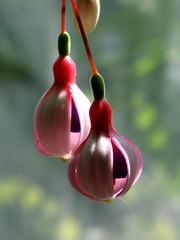
11 Years Ago
Maybe... they are tiny little buds. I should have gotten a shot with a pen or something for scale. I'll have a look round for different species of fuchsias.
11 Years Ago
Camile, I can't make it out from your photo, it would help if you have one close up of the flower.
11 Years Ago
Hi Alfred, The one that you mentioned looked like fuschsia, it is fuchsia. I have it in my backyard and hummingbirds love it :)! Happy Luna New Year :D!
11 Years Ago
Taken today on the University of Fl campus.
I have looked at every Google Image and no luck on ID.
11 Years Ago
Here's an interesting one. I can't find it online or in my field guides:
This plant grows in very dry desert areas (Death Valley, CA and Waterpocket Fold, Capitol Reef UT), has a bladder for water reserves, small leaves near the ground, which yellow and die, and tiny yellow flowers on long stems sprouting from the bladder. They range up to about 2 feet tall, but are often shorter. I've most often seen it in a dry wash. Obviously, the bladder takes advantage of short term water, and is the main source of photosynthesis after the leaves die in drought conditions, and allow the plant to bring the flower seeds to ripeness. If you click on top of the bladder, you can see the very small 5 petal flower most clearly.
This specimen was photographed in Waterpocket Fold, in Capitol Reef, June 4, 2011
11 Years Ago
That's interesting Gregory but I have no idea what is the name of it either. maybe someone can name this.
11 Years Ago
I was really excited to found this one at my local green house, cotton plant in blooms. the flowers look a lot like hollyhock.
11 Years Ago
This is really embarassing, but I don't know any of these flowers and would greatly appreciate some help:
Thank you very much!
11 Years Ago
Pop of red and White Tree Nymph #10 are some kind of Hibiscus, I'm sure. And I'm also sure that the fuscia dream is not a fuschia. (Note the correct spelling. You should fix this in your tags, and consider changing your title.
11 Years Ago
Ramona, Gregory is right, White tree Nymph, Pop of red both are Hibiscus. Fragile is Aquilegia or commonly known as Columbine..Spring rain is a Crape Myrtles and the other two I just couldn't make out what they are from your photo.
11 Years Ago
Hello,
Looking for type of flower, for keywords. I know it is a fairly common garden variety :) Thanks.
11 Years Ago
Xueling, it looks like a Arctotis or commonly called "African Daisy"
Tiny, i can't tell the name of your flowers without knowing more about it, is it from a tree? the size of the plant, flowers? how is the leaves look like?
11 Years Ago
Aloha Tiny by Nature . . your beautiful image is featured in our Macro group . . http://fineartamerica.com/groups/macro.html
The lovely blooms are called: Lobularia maritima
Wikipedia states:
Lobularia maritima syn. Alyssum maritimum, common name sweet alyssum or sweet alison, also commonly referred to as just alyssum (from the genus Alyssum in which it was formerly classified) is a species of low-growing flowering plant in the family Brassicaceae.
The genus name Lobularia comes from the a Greek word meaning "small pod", referring to the shape of the fruits. The name of the species maritima refers to its preferred coastal habitat.
It is an annual plant (rarely a short-lived perennial plant) growing to 5–30 cm (2–12 in) tall by 20–30 cm (8–12 in) broad.
The stem is very branched, with dense clusters of small flowers.
The leaves are 1–4 cm long and 3–5 mm, broad, alternate, sessile, quite hairy, oval to lanceolate, with an entire margin.
The flowers are about 5 millimetres (0.20 in) in diameter, sweet-smelling, with four white rounded petals (or pink, rose-red, violet and lilac and four sepals.
The six stamens have yellow anthers. The flowers are produced throughout the growing season, or year-round in areas free of frost.
They are pollinated by insects (entomophily). The fruits are numerous elongated seedpods rather hairy, oval to rounded, each containing two seeds.
The dispersal of seed is effected by the wing (anemochory)
This plant is native to the Mediterranean region, Macaronesia (Canary Islands, Azores) and in France in the Bay of Biscay. It is widely naturalized elsewhere in the temperate world. There is an endemic subspecies in the local flora of the Columbretes Islands.
Lobularia maritima is cultivated in gardens, with many horticultural varieties with purple or pink flowers
Read more about them here . . .
Information Source: http://en.wikipedia.org/wiki/Lobularia_maritima
╰⊰✿ . . * ♥ *..☆ ☆..* * . . After viewing all the cultivars I am reasonably certain your image is Alyssum (Purple) - Royal Carpet - Lobularia maritima . . * *..☆ ☆..* ♥ * . . ✿⊱╮. . . .
11 Years Ago
Hi Warren, beautiful shot! I wonder if this is another Mandevllia somehow the petals are different from the ones I know of. maybe Sharon would knows.
11 Years Ago
. . Aloha Warren . . Alfred . .
. . it looks familiar and my first thought was it is an Oleander . . there is only a hint of the leaves in your image yet your flowers have five petals . . so I googled pink and white flowers with yellow centre and confirmed it is an Oleander . .
Wikipedia states:
Nerium oleander (pron.: /ˈnɪəriəm ˈoʊliː.ζndər/) is an evergreen shrub or small tree in the dogbane family Apocynaceae, toxic in all its parts.
It is the only species currently classified in the genus Nerium.
It is most commonly known as oleander, from its superficial resemblance to the unrelated olive Olea.
It is so widely cultivated that no precise region of origin has been identified, though southwest Asia has been suggested.
The ancient city of Volubilis in Morocco took its name from the old Latin name for the flower.
N. oleander is either native or naturalized to a broad area from Mauritania, Morocco, and Portugal eastward through the Mediterranean region and the Sahara (where it is only found sporadically), to the Arabian peninsula, southern Asia, and as far East as Yunnan in southern parts of China
Oleander is one of the most poisonous of commonly grown garden plants.
http://en.wikipedia.org/wiki/Nerium
http://www.ces.ncsu.edu/depts/hort/consumer/poison/Neriuol.htm
. . from the colour and patterns of your image Warren I believe the variety or cultivar in yours is the smaller shrub . . a compact dwarf cultivar called
Nerium oleander 'Turner's Carnival'
http://www.learn2grow.com/plants/nerium-oleander-turners-carnival-carnival-pp6339/
Oleander is a Mediterranean shrub that thrives where summers are dry and hot. It is a large, vase-shaped evergreen with leathery lance-shaped leaves and colorful flowers, which appear all year—most heavily from late winter to early summer. The showy, single, flowers have a funnel-shaped base from which flare five prominent radial petals. Blooms are carried in loose clusters at the ends of the branches. The cultivar ‘Turner’s Carnival’ is a compact, dwarf plant with dark green foliage and is more cold tolerant than other oleanders. The unusual blooms have petals which curl at the margins and are dark pink with maroon edges and a yellow throat with burgundy stripes.
11 Years Ago
. . you're welcome . .
Aloha . . if you would like to see something very unusual and quite beautiful have a look at this just published in my portfolio here on Fine Art America . . a part of my Hibiscus collection . .
Hibiscus acetosella . Red-leaf Hibiscus . False Roselle, African Rose Mallow . Red Shield Cultivar . Shiny . Glossy .
Waiehu Maui Hawaii
It is a lovely Malvaceae . a Hibiscus flower called Hibiscus acetosella . red-leaf hibiscus, false roselle, African rose mallow . and the amazing thing with this lovely fast growing plant
is that the entire plant is this beautiful deep shade of red including the leaves . stem . buds . and bloom .. it is so beautiful .. and also this blossom is only about 1 inch in circumference ..
it is so small and delicate . a natural beauty so rare .
http://sharon-mau.artistwebsites.com/featured/hibiscus-acetosella-sharon-mau.html
11 Years Ago
Google images is not that good for identify flowers because it bases on tags and sometimes people use the wrong tags as well.
11 Years Ago
I love this white forsythia Alfred...this is the first time I see this beauty!
Thank you for sharing...
11 Years Ago
The white is very pretty....seems all i have seen in my area is the bright yellow color!
11 Years Ago
Here is what I found on the white forsythia on the web:
This deciduous shrub is related to the forsythia, but differs in that it has white (rather than yellow) flowers that open in early spring before true forsythia. It is a member of the olive family (Oleaceae). In early spring, before the new leaves form, purplish buds all along the grey naked branches open into small white four-petaled, almond-scented flowers with yellow stamens. After flowering, green, glossy abelia-like leaves appear.
11 Years Ago
Thanks Al. You are such a great resource.
If you ever get to central Fl...dinner is on me.
11 Years Ago
Thank you Warren! it will be so nice to meet you in person, the same offer to you if you ever come to Toronto for a visit.
11 Years Ago
Lewisia cotyledon is a species of flowering plant in the purslane family known by the common names Siskiyou lewisia and cliff maids. It is native to southern Oregon and northern California, where it grows in rocky subalpine mountain habitat. It is an evergreen perennial growing from a thick taproot and caudex unit. It produces a basal rosette of many thick, fleshy oval- or spoon-shaped leaves up to 9 cm (4 in) long. The latin cotyledon ("small cup") refers to the shape of the leaves.[1] Flowering from spring to summer,[2] the inflorescence arises on one or more stems 10-30 cm (4-12 in) tall, each stem bearing an array of up to 50 flowers. Near the flowers are small, pointed bracts tipped with resin glands. The flower has 7 to 13 petals, each about 1.5 centimeters long. The petals may be pale pink with darker veining, whitish with pinkish orange striping, or solid orange to yellow.
11 Years Ago
Ok, I have three, the orange I think is a primrose, If I'm wrong pleas let me know.
This one grows on a tree and always shows up in spring before a lot of other flowers.....
And this is a bush in my neighbors yard...shhh don't tell her:-)
Thanks in advance!
11 Years Ago
The first one is pansy, second is cherry blossom and last is Azalea all spring flowers.
10 Years Ago
I am guessing on mandeviila. It was a huge shrub or tree maybe 20 foot tall.
And one more... anyone know the yellow flower?
10 Years Ago
Warren,
I'd put my money on the red flowers as Jatropha, which I have in my backyard here in Central Florida:
http://en.wikipedia.org/wiki/Jatropha
and the other is a purple Agave and I can get the real name if you need it,
Rich
10 Years Ago
Thanks Rich. Wonder if Coral Bush and Jatropha are the same.
I am still searching for the yellow flower.
The agave...I was calling a Spanish bayonette.
10 Years Ago
Warren,
Coral Bush is a different plant all together, but can't help with the yellow stalky flower,
Rich
10 Years Ago
I would like to know the name of this wildflower. I took the photo in the Plains region of Texas.
10 Years Ago
@Warren - The yellow flowers may be eremurus robustus, also called desert candle and foxtail lily. Here is the google image search for "eremurus robustus". Although, now I'm scrutinizing it, the blossoms look different... sorry...
10 Years Ago
I have a houseplant I set up for a shot...and don't have a clue?
Here is the whole plant:
10 Years Ago
Thanks Rich...may have to try it!
Purslane is a succulent low-growing plant which is very tasty and crunchy. The entire plant can be used, the stems being most succulent. Purslane grows all over the world, often in disturbed soil. Purslane can be used as the main salad ingredient, lightly seasoned with diced onion, vinegar, and oil. The plant is good cooked with soups, steamed, sauteed, or pickled. Add it to omelets.
Thoreau used and enjoyed purslane, and he wrote of the plant, "I have made a satisfactory dinner off a dish of purslane which I gathered and boiled. Yet men have come to such a pass that they frequently starve, not from want of necessaries, but for want of luxuries."
10 Years Ago
But this is ornamental purslane, which is quite different in appearance and leaf structure from wild purslane.
I have my own plant problem, this is a plant with huge leaves, several feet wide that die back annually. I am told it has no flowers but it does have a knobbly spike a bit like the depictions of a caveman's club. It was planted in an ornamental garden, so I don't know its native habitat. When I took this the shoots were already about two or three feet high.
10 Years Ago
Paul,
Stay away from it, haven't you seen "Little Shop of Horrors"!!! That plant was in it!!!! RUUNNNNNNN,
Rich
did you ever recheck your scanner/film issue? Download SilverFast and re-scan?
Rich
10 Years Ago
Yes. it is Gunnera - elephant rhubarb. Thanks. I'd never heard of the stuff.
Rich, I've been busy in the darkroom for the last couple of days, so I haven't got round to downloading it yet, but I will when I am ready to scan again. I've got several rolls in the queue and a heap of sheets making their way back from the processor.
10 Years Ago
Warren,
Looks like a Wild Petunia to me, http://hawthornhillwildflowers.blogspot.com/2011/12/wild-petunia-ruellia-caroliniensis.html
Nice shot too!
Rich
10 Years Ago
A wildflower we saw in Panama:
In a garden in Panama:
Would be nice to be able to name these flowers. Thank you!
Heiko and Helga
10 Years Ago
Deborah,
Are they the same? I hope not! I have some Mexican petunias and they are invasive, grow all over the place unless they are contained. I had a bunch in the back yard and had to yank them all out,since they were trying to take over all my other "passive" plants!!! The only ones I now have are "contained in a small walkway area and can't easily spread.
I see you're in Florida too, so just a heads up on those banditios!!!
Rich
10 Years Ago
@Heiko - The second one is Spider Flower (Cleome hassleriana). I don't know what the first one is, but its beautiful. Great shot!
10 Years Ago
@Warren T - your "spider like" plant is a gaura - civilized - they grow wild but the flowers are smaller.
@Phyllis: JD is correct although yours is subspecies texana. Prickly Poppy, Argemone corymbosa grow out in the Mojave desert. There are apparently 30 species of Argemone's and two subspecies.
10 Years Ago
Camile - that looks like the seed head to a "leather flower plant" a type of wild clematis that is sort of purplish and bell shaped - depends on what subspecies as to color. There are some growing just down the road on a fence. some seed heads look a bit different - but that would be expected.
10 Years Ago
@Roy this particular flower came in bunched of this there was no other flower part around it,it may even be some sort of fancy weed ,but it was part of the plantation at the botanical gardens,there for a purpose
10 Years Ago
Camille - need the rest of the plant then - leaves - was it a vine or a stem up from a plant - I'm sure it's the seed head.
As for identifying flowers - when all you have is the flower or part of the flower - it's often hard to tell - need more info - like what the rest of the plant looks like, leaves, stems, and where you took the picture, where it was growing (ditch, swamp, prairie, vacant lot, woods and the location of that piece of dirt - like Omaha or Cincinnati, or on the beach in Florida. In a botanical garden - location won't help - as they bring in plants from all over the world. The plant is more important in identifying the flower than the flower - once you can ID the plant - you'll be able to quickly ID the flower.
Craig - you live in San Diego - is that where you took the picture? was it in someone's yard or were you out in the outback?
10 Years Ago
Roy,
Thanks. This was in Balboa Park. I should have taken notes. But when I am out shooting I just like to shoot, Surely one day an integrated pad for notes will be included with Nikon and maybe even a built in gps flower locator. lol I am laughing but watch what happens over the next few years. In Balboa Park they bring flowers and such from all over since its easy to adapt here. It may have even been from a tree now that I think about it but no it was more like a big bush/flower. Thanks anyways.
10 Years Ago
Yeah, Craig - one of the most beautiful Parks in America - go find it and take a pick of the plant. Been a while since I was in SD.
10 Years Ago
Marcio,
Hard to tell in the b&w but my guess is a Zinnia, looking at the leaves and stems,
Rich
10 Years Ago
Great Forum Alfred,
Here is one you do not see often, I just had someone identify it for me.....
Its called the Dutchman Pipe or Calico, and other names. It shape looks similar to a morning glory. on the vine this was looking directly at it.
10 Years Ago
No, not a dahlias, leaves and stems are wrong for that flower. This is some type of Zinnia, or even a type of "blanket flower" which grows wild here in Florida,
Rich
10 Years Ago
Thanks Michael for posting the Aristolochia (Duchmans pipe/ calico plant). we have one at the local green house and almost bloom al year around.
10 Years Ago
Marcio - where did you take the picture? I'm going to opt for that it is some form of daisy - looking at the stems and opening buds behind it. It doesn't look like a zinnia to me - and I have some just beginning to bloom. the petals are wrong. See - this image - those opening behind look like this
10 Years Ago
I took the photo in Ireland but I am uploading only now.
Thank you.. I will check in both names in google and see which one get near of one I have. :)
10 Years Ago
Marcio,
Do you have the color version?
Here's my Zinnia shot and you'll see that the leaves and stems are exactly like your photo. So two things, the flower hadn't compelety bloomed and the center flower hadn't opened yet OR the flower is in with a bunch of Zinnias. Doesn't seem to have the right petals for a daisey.
Rich
10 Years Ago
Camille: your's looks a lot like mine. If it is then see the image below and name of Prairie Smoke aka Old Man's Whiskers. Possible?
10 Years Ago
Alfred,
The flowers look similiar,maybe, but the leaves are totaly different from Marcio's image. Look closely at my leaves and compare then to Marcio's leaves and stems,
Rich
10 Years Ago
Rich, I don't have it in colour. The original is black and white film.
Alfred's Dahlias look like the one in my photo. But the centre is different.
Theses small differences can really change the flower type?
10 Years Ago
Rich, I don't see that the leaves are exactly opposite as zinnia's would be. and they certainly aren't gaillardia's, Indian blanket.
10 Years Ago
JD,
I don't think it is a Black Eye Susan because from he photo you can see the petals have two color even it is a black and white photo. The Black Eye Susan' petals just a solid yellow.
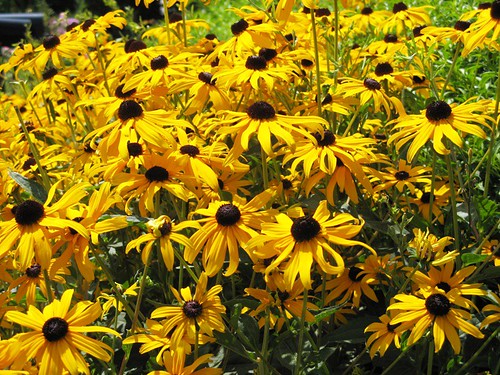
10 Years Ago
Does anyone know what this is? When I first ran across it, it was so bizarre, that I actually thought it was a man made creation, maybe made out of plastic. I touched the inner parts, to make sure. It was real.
10 Years Ago
Alfred, it is Gazania for sure. Exactly the one like in your photo.
Thank you very much. :)
10 Years Ago
You very welcome Marcio!
Here is more about the passion flower:
Passion flower is a woody vine that has unusual blossoms. Roman Catholic priests of the late 1500's named it for the Passion (suffering and death) of Jesus Christ. They believed that several parts of the plant, including the petals, rays, and sepals, symbolized features of the Passion. The flower's five petals and five petallike sepals represented the 10 apostles who remained faithful to Jesus throughout the Passion. The circle of hairlike rays above the petals suggested the crown of thorns that Jesus wore on the day of his death.
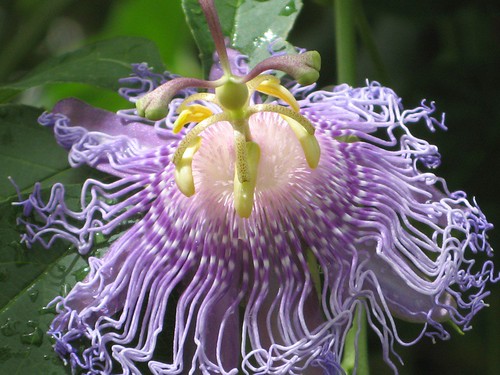
The passion flower also comes in red, yellow and white.
10 Years Ago
. . we have several varieties of Lilikoi here on Maui . . . I have them growing in my garden as well . . . here are a few examples . . the fruit is delicious . . Aloha ♥ http://fineartamerica.com/profiles/sharon-mau.html?tab=artworkgalleries&artworkgalleryid=262661
Passiflora alata, the winged-stem passion flower, is a vine which bears an edible type of passion fruit. It is native to the Amazon region of Brazil. The native peoples living in areas where the plant thrives refer to it as "ouvaca," meaning "red star" due to the appearance of its flower. This beauty was blooming in a botanical garden . .
Passiflora edulis is a vine species of passion flower that is native to Brazil, Paraguay and northern Argentina (Corrientes and Misiones provinces, among others). Its common names include passion fruit (UK and US), passionfruit (Australia and New Zealand), and purple granadilla (South Africa). It is cultivated commercially in warmer, frost-free areas for its fruit and is widely grown in Argentina, Australia, Bolivia, Brazil, the Caribbean, Colombia, Costa Rica, Dominican Republic, East Africa, Ecuador, Haiti, Hawaii, India, Indonesia, Israel, Mexico, New Zealand, Panama, Peru, Portugal, Puerto Rico, Sri Lanka, South Africa, United States (California and Florida), Venezuela and Philippines. The passion fruit is round to oval, either yellow or dark purple at maturity, with a soft to firm, juicy interior filled with numerous seeds. The fruit is both eaten and juiced; passion fruit juice is often added to other fruit juices to enhance the aroma. I photographed this one in my garden . .
Passiflora vitifolia is a species of Passiflora, native to southern Central America (Costa Rica, Nicaragua, Panama) and northwestern South America (Venezuela, Colombia, Ecuador, Peru). It is a vine with cylindric stems covered in red-brown hairs when young. The leaves are serrate, three-lobed, up to 15 cm long and 18 cm broad. The lobed leaves' resemblance to grape leaves gives this passionflower its specific epithet . vitifolia . meaning - grape leaves - after the Latin for grape - vitis -
The flowers are bright red, up to 9 cm diameter.
The fruit is a berry 5 cm long and 3 cm broad, with green flesh speckled with white, slight downy hairs, containing numerous seeds.
The fruit is quite sour still when it falls off the plant and can take a month to ripen to its full flavour of sour strawberries. I photographed this beauty in a private garden in Keanae on Maui . a vigorous grower and flowering vine . it is climbing a coconut palm tree . .
Kingdom: Plantae
(unranked): Angiosperms
(unranked): Eudicots
(unranked): Rosids
Order: Malpighiales
Family: Passifloraceae
Genus: Passiflora
Wikipedia states: In Hawaii passion fruit is called lilikoi and comes in yellow and purple varieties.
Passion fruit can be cut in half and the seeds scooped out with a spoon. Lilikoi-flavoured syrup is a popular topping for shave ice. It is used as a desert flavouring for malasadas, cheesecakes, cookies, ice cream and mochi. Passion fruit is also favoured as a jam or jelly, as well as a butter. Most passion fruit comes from backyard gardens or is collected from the wild. While it may be found at farmers' markets throughout the islands, fruits are seldom sold in grocery stores. end quote . . Why? I believe because they are so abundant . . the vine produces very beautiful flowers that I always enjoying photographing . . but it grows about two feet per day and is invasive so must be contained . . I cut/prune mine back hard every couple of days . . otherwise they would grown over the house and choke the trees . . Aloha :)
10 Years Ago
I love this flower discussion....
Oh how beautiful are all these amazing and varied flowers...
Here's one of mine :
I call it a Flame Flower, but I think it's actually a Coral Bead Tree...
10 Years Ago
. . Aloha Ankya . . it is a bloom from an African Tulip tree . . Spathodea is a monotypic genus in the flowering plant family Bignoniaceae. The single species it contains, Spathodea campanulata, is commonly known as the Fountain Tree, African Tulip Tree, Flame-of-the-forest, Rudra Palash, Pichkari or Nandi Flame. We have them here on Maui as well . . there are trees with the brilliant orange flowers and also rarely seen with a yellow flower . . Read more about them in my description here . .
10 Years Ago
What type of aquatic plant is this? It was photographed on a north Florida fresh water pond.
10 Years Ago
Too easy - Pickerel Weed. Pontederia cordata, common name pickerelweed or pickerel weed, is a monocotyledonous aquatic plant native to the American continent.
10 Years Ago
Thanks Roy! It may be easy for you but it was tough for me. Here's another one if you are game...
10 Years Ago
This is called Showy Jacob's Ladder. I found this up in the Mt. Rainier National Park in Washington State, USA.
10 Years Ago
Lynn - that's the wild version of Gaura. It's been tamed and you can get them at Lowe's where the flowers are a little larger than quarter size. these wild ones are supposed to be an indicator of the health of our dirt here in north central Florida - at least that's what my botany professor led us to believe back in the summer of '93 (alright 19, not 18)
Puzzles - both of those are some kind of daisy - and probably from a seed packet rather than a wild flower. You can tell by that center 'cone' shape.
10 Years Ago
@Alfred - "I don't think it is a Black Eye Susan because from he photo you can see the petals have two color even it is a black and white photo. The Black Eye Susan' petals just a solid yellow. "
Actually some garden varieties of Black Eyed Susan are bi-colored and look just like the photo. I have grown them before.
@Puzzles - Yours both appear to be garden varieties of Black Eyed Susan.
10 Years Ago
Craig, your Begonia is called " Mardi Gras" which bears snow white double blooms with creamier at the center with crimson-edged petals.
http://www.flickr.com/photos/15234374@N07/5621300641/#
10 Years Ago
Puzzels, your first image is likely a Zinnia, here is one I took and it looks very similar to yours.
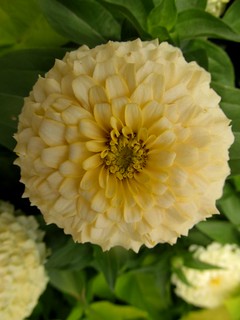
10 Years Ago
Here's one I'm wondering about. As far as I have been able to find out, I think this is called Sneezeweed, or Fringed Sneezeweed, but not positive. It's slightly larger than a quarter, almost always grows in groups, one per stalk as here, usually no more than 1 1/2 feet tall. I've seen anywhere from 3 or 4 to 12 or 15 per group. Don't have a shot of the entire plant right now, but can get one later today and put it on Flickr if needed.
By the way I took this using my binocular lens rig, which is done by putting the objective lens of a pair of junk binoculars onto a 50mm lens and using it as a magnifying glass. I've used it for 3 or 4 years, works great and as you can see it gets very good detail. I've gotten some amazing insect shots...
10 Years Ago
Yes Billy, it is definitely a Sneezeweed. I think it is probably Common Sneezeweed (Helenium autumnale).
I like your binocular lens rig. I used to do something similar, but with lower quality magnifying glasses. I had to hold them in front of the lens though, so it wasn't as good as your setup, and the quality was also lacking. Your photo is very crisp.
10 Years Ago
Thanks JD. I've been using it several years, and it just happens it wiggles onto the 49mm filter ring of my 50mm lenses just right, and it was a pretty decent pair of binoculars...till they got dropped. I wish I had the expensive equipment, I can fix them, I have the training, but don't have the $20,000 worth of specialized equipment...I got some more shots today, not on the computer yet but I'm hoping for a good shot of a Grey Hairstreak butterfly on a flower similar to Coreopsis.
Thanks for the ID, I was fairly certain but don't have my books handy, all packed away since the move back to Texas...I was thinking Fringed Sneezeweed, but Common is not much different if I remember correctly.
10 Years Ago
Ok, guys before I post these, can anyone tell me what they are?
EDIT - I won't see the answer until tomorrow - have to get up for work so I'm hitting it now - thanks
10 Years Ago
Today, at my local greenhouse, i noticed a blooming plant which looks a lot like morning glory but all the blooms are closed already.
when I ask the gardener there and was told it indeed is morning glory but it blooms only at night!
after some research, this is what I found:
Ipomoea alba, sometimes called the moonflower (but not to be confused with the other species also called moonflower) or moon vine, is a species of night-blooming morning glory, native to tropical and subtropical regions of the New World, from northern Argentina north to Mexico and Florida.
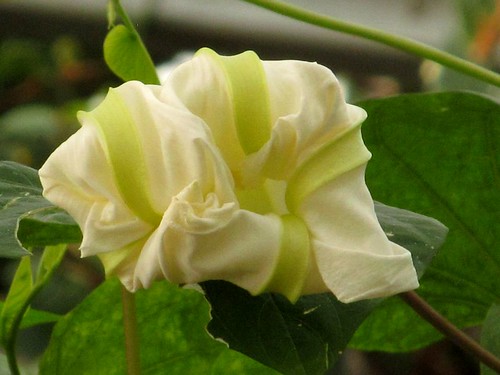
10 Years Ago
Hi Mary, I must missed your posting all together. the first one looks like a close up of the Swiss chard. the other three photos are Zinnia.
10 Years Ago
am i close to saying this is a cattleya? if not i have to stop naming these orchids in the title... before it goes into print - what type of orchid is this?
thanks
---Mike Savad
10 Years Ago
Aloha Alfred . . 'ae . specifically it is a . .
Cattleya Hybrid - Laleia hybrid
. Richard Mueller or RM hybrid . . called
Brassocattleya Rustic Spots
or
Bc. Rustic Spots
Bc. Richard Mueller x Cattleya Landate
(Bl. Richard Mueller x C. Landate)
10 Years Ago
Can anyone identify this flower. Help would be appreciated.
I was able to find out its name.
Euphorbia characias wulfenii (Mediterranean spurge)
10 Years Ago
I'm usually pretty well up on my flowers - but this one has me stumped - I saw one close to this at Lowe's the other day - but this flower was larger and has that fringe of anthers
10 Years Ago
@Roy - Some can be big. According to one of my field guides, Great St.-John's-Wort (Hypericum ascyron) can be 1 1/2 - 2 inches across. Maybe this is an escaped cultivar?
10 Years Ago
HI there! A friend recommended this thread to me . I have a flower I posted without being sure of what it is.. Hence the generic title of Yellow fellow-- a tad corny! lol
Thanks!!
10 Years Ago
This was taken on Isle of Guernsey, part of the Channel Islands off the coast of France. I am not sure if it is a berry, or a flower.
thanks if you can help! Rebecca
10 Years Ago
Hi Alfred, How about these two plants / flowers I cam across while in San Antonio Texas?
#1
It looks like a daisy but the center looks more like a mustard plant??
It does come closely similar to Billy Griffis Sneezeweed but the petals are a bit different than I can find.
These grew mostly around the prickly pear cactus that I came across.
#2
Would this also be apart of a new bloom of the prickly pear cactus or perhaps another breed of cactus?
10 Years Ago
Jack Torcello, I checked it out on Google, and I did an image check to compare that photo - it isn't a gum rockrose, or Potentilla (which are 2 different things), and I couldn't get any image on Google that was close to it. So, onward............
But thanks for your try!
Rebecca
10 Years Ago
Peter, the yellow one is a Coreopsis likely a "baby sun" not a wild flower but easy to grow.
10 Years Ago
Ilka - the one on the right looks very much like sea grape http://tinyurl.com/lgw9o6o
Can't help with the first image - Never been to Costa Rica.
10 Years Ago
Thank you Alfred for the ID on the yellow one, I found out the name of the spiky cactus.
Cylindropuntia leptocaulis, Opuntia leptocaulis, Christmas Cactus, Christmas Cholla, Pencil Cholla,
10 Years Ago
Martin, it is a cosmos, Cosmos is native to scrub and meadowland in Mexico where most of the species occur, Florida and the southern United States, Arizona, Central America, and to South America in the north to Paraguay in the south. It is also widespread over the high eastern plains of South Africa, where it was introduced via contaminated horsefeed imported from Mexico during the Boer War.
10 Years Ago
Thanks Jan. Think you are right.
Delphinium is a genus of about 300 species of perennial flowering plants in the family Ranunculaceae, native throughout the Northern Hemisphere
and also on the high mountains of tropical Africa.
10 Years Ago
I'm seldom stumped for long with the ID of flowers - but this one has me. I can tell you that I took the photograph in north central Florida. It looks sort-of-like a dandelion, but I'm pretty certain it's not one of them. It is a wild flower - not one grown in a garden.
10 Years Ago
Alfred - wild flower - more likely a weed - it was growing on the side of the road. small flower, perhaps the size of a quarter (even a Canadian one). and it's just the flower, there is no stalk and that green - has nothing to do with that flower - just back ground noise.
10 Years Ago
Sorry, I can't help out on an i.d. for your white flower, Roy.
Can anyone tell me what kind of flowers these are? I thought maybe some kind of primula but I really don't know. They were in a variety of colors in somebody's garden.
10 Years Ago
@Peggy — That looks like Primula to me.
@Roy — It looks like maybe a lighter colored variety of Smallflower Desert Chicory (Pyrrhopappus pauciflorus).
10 Years Ago
@Martin . . Alfred . . . .
. the purple floral image is not a Cosmos . it is Osteospermum
. . and looks like either
Osteospermum fruticosum (L.) Norl., Trailing African Daisy, Shrubby Daisybush
or perhaps
Osteospermum ecklonis (DC.) Norl., Cape Marguerite, Blue-and-white Daisybush
. . Osteospermum /ˌɒsti.ɵˈspɜrməm/ is a genus of flowering plants belonging to the Calenduleae, one of the smaller tribes of the sunflower/daisy family Asteraceae. . it is also called the Trailing African Daisy or Shrubby Daisybush . It is a shrubby, semi-succulent herbaceous flowering plant native to South Africa, belonging to the small tribe Calenduleae of the sunflower family. Osteospermum once belonged to the genus Dimorphotheca, but only the annual species remain in that genus; the perennials belong to Osteospermum. The genus Osteospermum is also closely related to the small genus Chrysanthemoides, such as C. incana and C. monilifera. The scientific name is derived from the Greek osteon (bone) and Latin spermum (seed). It has been given several common names: African daisy, South African daisy, Cape daisy and blue-eyed daisy.
Osteospermum flower
Scientific classification
Kingdom: Plantae
(unranked): Angiosperms
(unranked): Eudicots
(unranked): Asterids
Order: Asterales
Family: Asteraceae
Tribe: Calenduleae
Genus: Osteospermum
. Gazanias are one variety of the overall broad description African Daisy and include this group . . they are not endemic to Hawaii and are only found on Maui in cultivated gardens . . I have similar ones here . . rarely see them . they are lovely . .
10 Years Ago
@JD - I think you've got it - the "desert" kind of threw me off - but Florida is listed as a place it grows - and if it weren't for the Gulf of Mexico and The Atlantic Ocean - Florida would be just a "spit of sand".
10 Years Ago
Traveling through West Virginia last year, stopped at the New River Gorge to take a look and a few photo's - anyone know what the name of this flower is?
10 Years Ago
@RoyD – I don't think it is Ranunculus, because the leaves are different, but it is probably from the same family. Possibly a St. John's wort, or maybe some other mallow. If I recall, somebody posted the same flower here a while back, and we never figured out what is was. Maybe that was even you, I don't remember. :-)
10 Years Ago
Maybe a species of Primrose (ludwigia) probably water primrose.
http://www.outdooralabama.com/fishing/freshwater/where/ponds/p/ap/guide/emergent/ludwigiap.cfm
10 Years Ago
Roy, I wonder if your flower could be Hibbertia scandans , otherwise known as "snake vine", "climbing Guinea flower" or "golden Guinea vine". I don't know; this is native to Australia, but I imagine it could show up in W. VA. Most of the photos I've found of it (see Google Images) show the pistil as a bit less distinctive, but I saw a few that looked similar. At first I thought it was lesser celandine, which is invasive in our area (Eastern PA) but that has 6 petals & they're more slender.
10 Years Ago
I don't think it looks like the water primrose, the way the petals are attached. Sorry, I forgot to include links. Here's the wiki description: http://en.wikipedia.org/wiki/Hibbertia_scandens
and then here's Google images: https://www.google.com/search?q=Hibbertia+scandens&client=firefox-a&hs=CwJ&rls=org.mozilla:en-US:official&source=lnms&tbm=isch&sa=X&ei=pXbpUryvL4jMsQTt1ID4Dg&ved=0CAkQ_AUoAQ&biw=1680&bih=911#imgdii=_
10 Years Ago
JD & Jan - it's not St Johns Wort - the center and petals of the flower looks very different. Google it. I sold a ton of that at my job last year.
10 Years Ago
@Heather – I think you are correct that it isn't St. John's Wort. However, I don't think it is buttercup either, because the leaves of buttercups are dissected, and the center of their flowers is a ball of small seeds. This flower appears to have only a single ovary.
@Anna – I think you are on the right track. The leaves are definitely similar to Hibbertia scandans. In most of the photos the pistil is concealed, but I think that may be coincidental.
10 Years Ago
Roy, it looks like a Shrubby Cinquefoil.
Here's a link that has a flower that looks similar to your flower. http://www.bcliving.ca/garden/shrubby-cinquefoil-a-hardy-BC-based-flower
10 Years Ago
@Warren – My first impression of it was that it was Cleome, but on a closer look I think it is something else. The stem appears to be square, which suggests it is something in the mint family. The leaves and flowers support that as well.
10 Years Ago
. . Aloha Warren . . your floral is called Orthosiphon aristatus . .
Orthosiphon aristatus is from the family of Lamiaceae / Labiatae
Commonly known as Cat's Whiskers . . . .
I have one as well in my gallery . . photographed in Nahiku Rainforest on Maui
10 Years Ago
Here is a new one that needs an ID. I took this photo two years ago at Burgess Falls State Park in Tennessee. It was growing like a weed right down on the rocks in the river - not in the water - but in the cracks of the rocks.
10 Years Ago
Warren,
First thought it was a type of Penstemon, but if that is the stem in the back ground,probably not,more clumpy flowers. Was this looking more like a clump of Irises? Could be some type of wild bearded iris,I'll keep looking,
Rich
10 Years Ago
Thank you JD
Warren - a violet - and perhaps a birdfoot violet if the leaves aren't 'heart' shaped but have deep indentations
10 Years Ago
@Warren — @Phyllis is correct. This is definitely a violet (Viola sp.). Determining the exact species can be difficult, as there are many that are often similar. If you had a shot of the leaves, that would narrow it down somewhat.
@Rich — The leaves in the background do look like irises or daffodils or some other similar monocotyledon. But they don't belong to the flower.
10 Years Ago
Aloha Warren . . it is
Viola nephrophylla (Northern Bog Violet)
Violaceae
Viola nephrophylla (Northern bog violet; syn. Viola nephrophylla Greene f. albinea Farw., Viola pratincola Greene, Viola retusa Greene ) is an annual or perennial forb in the Violet family (Violaceae) native to North America. Viola nephrophylla was named by Edward Lee Greene in 1896 from specimens he collected near Montrose, Colorado. The species name, nephrophylla, is from the Greek for "kidney shaped leaves"
10 Years Ago
Thanks everyone. This shot was at grass level, Don't think I have any of the violet leaves.
The grass is your basic St. Augustine.
10 Years Ago
JD,
You beat me to it! From Wiki:
"The actual flower of the plant is small and generally white, but each cluster of three flowers is surrounded by three or six bracts with the bright colours associated with the plant, including pink, magenta, purple, red, orange, white, or yellow."
Arlene, those red things aren't actually flowers, but bracts or leaves and watch out for thorns,when next to these bushes............
Rich
10 Years Ago
JD,
You beat me to it! From Wiki:
"The actual flower of the plant is small and generally white, but each cluster of three flowers is surrounded by three or six bracts with the bright colours associated with the plant, including pink, magenta, purple, red, orange, white, or yellow."
Arlene, those red things aren't actually flowers, but bracts or leaves and watch out for thorns,when next to these bushes............
Rich
10 Years Ago
Warren - as for that violet: http://fnpsblog.blogspot.com/2012/10/say-yes-to-violets.html
appears to be the Viola palmata. The link appears to be mostly about south Florida. It could also be Viola floridana - which seem more ubiquitous around here as the palest of blue flowers - looking white - considered weeds to some. I encourage them.
They are very common around north central Florida - the ones here in my yard are blooming now
10 Years Ago
Mark,
I wouldn't get to close to that one! I think I saw it in the "Little Shop of Horrors" movie!
An "Eatum" from the "Eatcha" family..............
Rich
10 Years Ago
Thanks Rich...
Has anyone seen my wife? Last I saw her, she was headed out to the flower barn with the pruning shears and all I can find are the shears?? ;)
10 Years Ago
QUESTION? The grower gave me permission but he said "If my wife was here she would jump up and down"...then under his breath he said to someone else..."if you can take a picture / you can buy it." I can see art as copyrighted,,,but is an object in nature able to be copyrighted?
10 Years Ago
Warren, some of those orchid growers spent years to create a hew orchid so they are rather protective of their plants not unlike artists with their arts.With this one I think they wanted to sell you the plant and knowing once they allowed you to take photos you will not buy it so they lost a sale from you.
I know in some orchid shows there is a special time for photographers only, you should check it out.
10 Years Ago
I think Alfred hit the nail on the head - This doesn't look like a special 'new' hybrid but a rather ordinary purple Cattleya orchid.- so it's the lost sale.
10 Years Ago
Warren,
What Alfred and Roy said is good advice. If you are at a public space and something open to the general public, you can photograph anything. But of course, you can't use those images for commercial purposes either. If you are spending a lot of time shooting images at a nursery, then I would also purchase something from them too, as a thank you. Which I have done when I photographed some of these images, a few years ago:
That is you can photograph ALMOST anything,unless Monsanto is involved!!! LOL!
Rich
10 Years Ago
Thanks Al, Roy and Rich. I will learn from you.
Think I would have respected this guy more if he had a no photo policy and put up a sign...
than his sarcasm and talking under his breath.
10 Years Ago
Warren, I been to many of those orchid shows, most of those growers are very friendly and helpful with advices of how to grow orchids but when they knew you are not there to buy only to take photos they might give you the cold shoulder. They think you are taking up their time and their booth spaces. They needed to sell. it is like when I in an art show someone came just wanted tips on how to paint.
10 Years Ago
Okay, I know this is a tulip but I tried to search what kind with no luck. Any suggestions? Also, couldn't find one with the tri colored leaf "thingy" either.....what is that exactly?
10 Years Ago
Melissa, the little leafy thing looks to be a second flower bud that hadn't yet opened, or wasn't fully developed. Maybe an aberration where the plant got mixed up and grew a leaf that was partly a flower bud.
9 Years Ago
Just cannot remember the name of this cabbagy flower, received today for mothers' day........anyone know? Thank you.
9 Years Ago
Thanks so much, Sharon.......indeed it is........Wishing you well this day, Cheers, Vivian
9 Years Ago
Does anyone know this flower? I would appreciate it very much for any help you may provide.
9 Years Ago
Craig, it's called a Blanket Flower, and is in the sunflower family. Here's the Wiki link for info. You can research it further from there.
http://en.wikipedia.org/wiki/Gaillardia
9 Years Ago
stalk is similar to a chive... quite large (there's a bee on it for scale)... photographed in a city rooftop garden in London.
No idea what it is.
9 Years Ago
looks like an ornamental onion, I've grown some of these but depends where you buy them for the common name.
9 Years Ago
Some sort of allium? http://www.perennialreference.com/perennials/allium.html
9 Years Ago
@Phyllis — That is Sandbog Death-camas (Zigadenus glaberrimus). Death-camases are poisonous, so don't eat it! :-)
9 Years Ago
Thanks JD. I will be sure not to eat them.! LOL I will have to watch my grand daughter around them because she loves to pick wildflowers for me.
9 Years Ago
Alfred, I have seen that flower before, I believe the common name is Poor Mans orchid, the botanical name I'm not sure but a quick google search might reveal it. I have picked these flowers of a very large tree it has a bark type twig as a stem and they do hold up a few days if cut properly.
oh, sorry Alfred, I should have read your complete op, I thought you were asking for the name of your flower.
9 Years Ago
No problems Mario, this thread is to help other with ID flowers and plants. I learn a lot of names of flowers I haven't seen before.
9 Years Ago
Having been in the flower business and landscape business years ago, I can certainly appreciate that, I cringe at all the names of flowers and plants I was expected to know, I have since purged my brain of all such names of flowers and plants and think that the people that give the botanical names to plants do more with there plants than just name them.Lol
9 Years Ago
I'm hoping that someone recognizes this. It grows wild on our property, and I have looked in both of my wildflower books, and did an image search on Google. Nada. I realize it's not a striking flower and am not planning on trying to sell the photo, but I'd still love to know what it's called!
thanks, Rebecca
9 Years Ago
. . Aloha Rebecca . first I visited your portfolio to see where in the world you live . . South Carolina . . .
Next I conducted a google search using
Keywords:
south carolina • wildflowers • round • white flower • five petals • red stem • long stem • basal leaves . .
. . and found it :))
Parthenium integrifolium
http://en.wikipedia.org/wiki/Parthenium_integrifolium
Wikipedia:
Parthenium integrifolium is a species of flowering plant in the aster family known by the common names wild quinine, American feverfew, and eastern feverfew. It is native to the eastern United States. This plant is a perennial herb growing 30 to 60 centimeters tall, but known to exceed one meter at times. The glandular leaves are oval to lance-shaped and variable in size. They have serrated, toothed, or lobed edges. The inflorescence is an array of several flower heads containing whitish disc flowers and 5 to 6 ray flowers. The "flowers have a pleasant but mild medicinal fragrance. This plant grows in disturbed areas as well as prairies, woods, and hillsides. It tolerates hot and cold climates and can be used as a garden plant in many areas. The leaves of the plant contain tannins and the plant was used for medicinal and veterinary purposes by Native Americans.
Scientific classification
Kingdom: Plantae
(unranked): Angiosperms
(unranked): Eudicots
(unranked): Asterids
Order: Asterales
Family: Asteraceae
Genus: Parthenium
Species: P. integrifolium
Binomial name
Parthenium integrifolium
***************************************************************
Parthenium integrifolium - Flora of North America
***************************************************************
5. Parthenium integrifolium Linnaeus, Sp. Pl. 2: 988. 1753.
Parthenium auriculatum Britton; P. hispidum Rafinesque; P. hispidum var. auriculatum (Britton) Rollins; P. integrifolium var. auriculatum (Britton) Cornelius ex Cronquist; P. integrifolium var. henryanum Mears; P. integrifolium var. hispidum (Rafinesque) Mears; P. integrifolium var. mabryanum Mears; P. radfordii Mears
Perennials, 30–60(–100+) cm. Leaf blades ovate to lanceolate, 30–350+ Χ 20–120+ mm, margins usually crenate to serrate, sometimes coarsely toothed or somewhat lobed (then mostly toward bases), faces hispid to hirtellous or ± scabrous, gland-dotted. Heads radiate, borne in corymbiform to paniculiform arrays. Peduncles 1–8(–12+) mm. Phyllaries: outer 5(–6) lanceolate to broadly ovate, 3–5 mm, inner 5(–6) ± orbiculate, 4–6 mm. Pistillate florets 5(–6); corolla laminae ovate to oblong or orbiculate, 1–2+ mm. Disc florets 15–35+. Cypselae ± obovoid, 3–4+ mm; pappus-like enations 0 or 2(–4), erect to spreading, ± subulate or threadlike, fragile, 0.3–0.6+ mm. 2n = 72.
Flowering May–Sep. Glades and barrens, prairies, disturbed sites; 10–500 m; Ala., Ark., Conn., Ga., Ill., Ind., Iowa., Kans., Ky., La., Mass., Mich., Minn., Miss., Mo., N.Y., N.C., Ohio, Okla., Pa., S.C., Tenn., Tex., Va., W.Va., Wis.
http://www.efloras.org/florataxon.aspx?flora_id=1&taxon_id=242416946
9 Years Ago
Sharon, how amazing! I apologize for not including my state in the post. I went back to my (thick) books and still can't find it! I would not have thought it was in the aster family. Wish it were more photogenic, but I don't think many people would be drawn to it.
Thanks again so much!!
Rebecca
9 Years Ago
Greetings to everyone. I found this flower group today but have no idea what it is called. Could anyone help?
Thank you in advance.
Richard